




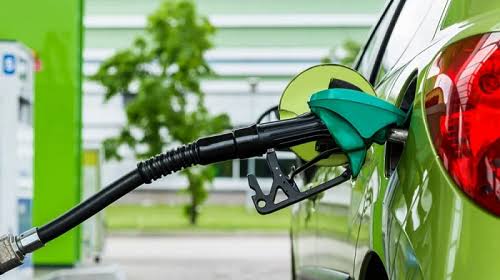

Indonesia is preparing for another major shift in its fuel strategy. After pushing ahead with the B50 biodiesel program, the government is now turning its attention to gasoline blended with bioethanol, with President Prabowo Subianto calling for the development of E50 as part of a broader effort to reduce the country’s reliance on imported fuel.
The proposed E50 program would contain 50% bioethanol. Prabowo has instructed Minister of Energy and Mineral Resources (ESDM) Bahlil Lahadalia to prepare a roadmap for its development, using the experience and progress of B50 as a reference.
The directive was delivered during a Plenary Session of the National Energy Council (DEN) at the Merdeka Palace in Jakarta on Thursday, September 17, 2026. According to Bahlil, the government is being asked to examine what has made the B50 program successful and apply a similar approach to the development of E50.
“We have also decided that, in the long term, we should study the success of B50. Based on what we have learned from this, the President has instructed us to immediately formulate similar steps to develop E50,” Bahlil said after the DEN session at the palace.
The move comes as Indonesia continues to face high domestic fuel consumption. For the government, increasing the availability of fuel produced from domestic resources could become an important part of reducing dependence on imports while strengthening the country’s own energy supply.
But E50 is not starting from zero.
Indonesia has already introduced bioethanol-blended gasoline commercially, although at a much lower blending level. The country currently sells E5, a gasoline mixture containing 5% bioethanol, through Pertamax Green 95, a product with an equivalent RON 95 rating available at Pertamina gas stations.
As of September 2026, Pertamax Green 95 is priced at IDR 19,150 per liter. The price has increased from IDR 16,600 per liter in the previous month.
That existing E5 program gives Indonesia an initial platform from which to consider a much larger bioethanol market. The bigger question is how quickly the country can expand production, infrastructure, and distribution if the government wants to move toward E50.
While the government is now discussing E50, Indonesia’s current bioethanol implementation remains relatively limited.
Pertamina New & Renewable Energy (Pertamina NRE) CEO John Anis previously said the company is ready to support the government’s effort to accelerate bioethanol development. He explained that Pertamina wants to play a larger role in bioenergy and has a similar ambition to continue expanding ethanol-blended fuel.
“So perhaps you are wondering why Pertamina is here, Sir, but you can see that we want to contribute to bioenergy. We also want to thank you for B50, congratulations. We share the same ambition and enthusiasm for E20, Sir,” John said while accompanying Prabowo at the National Simultaneous Harvest Festival with the TNI in Malang, East Java, some time ago.
For now, Indonesia has only implemented E5 on a limited basis. John said the blend is currently available at around 170 Pertamina gas stations in East Java and Jakarta.
That scale remains small when compared with developments in some other countries. John pointed specifically to India, where the implementation of ethanol-blended gasoline has already reached E20.
“So we don’t want to fall behind, Sir. We have to catch up with them. We are only at E5, Sir. So this E5 is available at 170 of our outlets in East Java and Jakarta,” he said.
The comparison highlights the gap Indonesia still needs to close. Moving from E5 toward higher blending levels will require more than simply adjusting the percentage of bioethanol in gasoline. It will also depend on the availability of feedstock, production facilities, supply chains, pricing, regulations, and infrastructure capable of supporting wider distribution.
Pertamina is therefore looking beyond a single raw material. John said the company is developing bioethanol using several types of feedstock, including sugarcane, palm sugar, cassava, corn, and sorghum.
The broader the feedstock base, the greater the potential for Indonesia to develop a domestic bioethanol industry across several agricultural regions. It also creates a direct link between fuel policy and the agricultural sector, particularly when domestic production begins to require much larger volumes of raw materials.
Scaling up Indonesia’s bioethanol program will require significant industrial capacity. According to John Anis, the country may need approximately 20 to 30 new bioethanol plants within the next two years to meet national demand.
That would represent a substantial expansion of the country’s production infrastructure. It would also spread the economic effects of the energy transition beyond fuel companies and into agricultural communities and other parts of the supply chain.
John said the construction of bioethanol plants in different regions could help improve farmers’ welfare by creating stronger domestic demand for agricultural feedstock.
Read also: Hotels and Restaurants in Five Bali Tourist Areas Must Use Solar Power
The logic behind the approach is straightforward. Instead of relying on imported fuel and sending money overseas, a larger share of the value chain could be kept within Indonesia by sourcing raw materials from domestic farmers and processing them locally.
“Instead of imports sending the money overseas, Sir, give it to the farmers,” John said firmly when responding to Prabowo’s question about the policy’s potential impact on reducing imports.
The proposed expansion therefore carries implications beyond energy security. A larger domestic bioethanol industry could connect fuel production with agriculture, manufacturing, infrastructure development, and regional economic activity.
However, building dozens of new plants is not simply a matter of construction. The entire ecosystem has to function together.
Pertamina has stressed that mandatory regulations will be essential for the development of the bioethanol market. The company also highlighted the need for certainty over feedstock prices.
These two factors are closely connected. Mandatory blending rules can help create predictable demand, while stable and sufficiently attractive feedstock prices can provide producers with greater certainty when planning investments in processing facilities.
Without clear regulations and predictable input costs, the development of a large-scale bioethanol industry could become more difficult to sustain. Investors and producers need to know that there will be a market for the fuel and that the raw materials required to produce it can be sourced on commercially workable terms.
The push toward E50 reflects a broader direction in Indonesia’s energy policy. The government is seeking ways to increase the role of domestically produced resources in meeting fuel demand, rather than relying too heavily on imports.
B50 has already become an example that the government wants to learn from. Prabowo’s latest instruction is for the same type of approach to be considered in the development of E50, with Bahlil tasked with preparing the necessary steps.
At the same time, Indonesia already has a starting point through the commercial implementation of E5. Pertamax Green 95 is currently available through Pertamina’s retail network, although only at around 170 outlets in East Java and Jakarta according to John Anis.
The current pricing also shows that ethanol-blended fuel already exists as a commercial product in Indonesia. Pertamax Green 95 stood at IDR 19,150 per liter in September 2026, compared with IDR 16,600 per liter a month earlier.
The next stage, however, would be significantly more ambitious. E50 would require a much larger supply of bioethanol and a much broader supporting ecosystem than the current E5 program.
This is why the government’s current focus is not only on the fuel blend itself. It also involves the development of feedstock, industrial facilities, regulations, pricing mechanisms, and domestic supply chains.
The choice of feedstocks could become particularly important. Sugarcane, palm sugar, cassava, corn, and sorghum provide several possible sources for bioethanol production, potentially allowing different regions to participate according to their agricultural strengths.
For farmers, that could mean new demand for crops that are used as industrial feedstock. For industry, it could mean opportunities to build and operate new production facilities. For the government, it could support the wider objective of reducing fuel import dependence.
The scale of the planned expansion remains the central challenge. The government wants to move from a limited E5 implementation toward E50, while Pertamina estimates that 20 to 30 additional bioethanol plants may be needed within just two years to meet domestic demand.
That makes policy certainty especially important.
Pertamina has emphasized that mandatory regulations and certainty in feedstock prices are necessary for the ecosystem to develop. Without those foundations, increasing production capacity could become difficult even if the country’s fuel demand remains high.
For now, Indonesia’s bioethanol journey is moving in stages. E5 is already being sold commercially through Pertamax Green 95. The government is now studying how the B50 experience can be applied to an E50 strategy. Pertamina is expanding research and development across several feedstocks, while also pointing to the need for 20 to 30 new plants over the next two years.
The direction is clear, but the transition will depend on how effectively Indonesia can connect energy policy with agriculture, industrial investment, regulation, and domestic supply chains.
If the required ecosystem can be built, bioethanol could become more than just a fuel-blending policy. It could also create a larger domestic industry around agricultural feedstock, processing facilities, and energy production, while supporting the government’s objective of reducing dependence on imported fuel.