




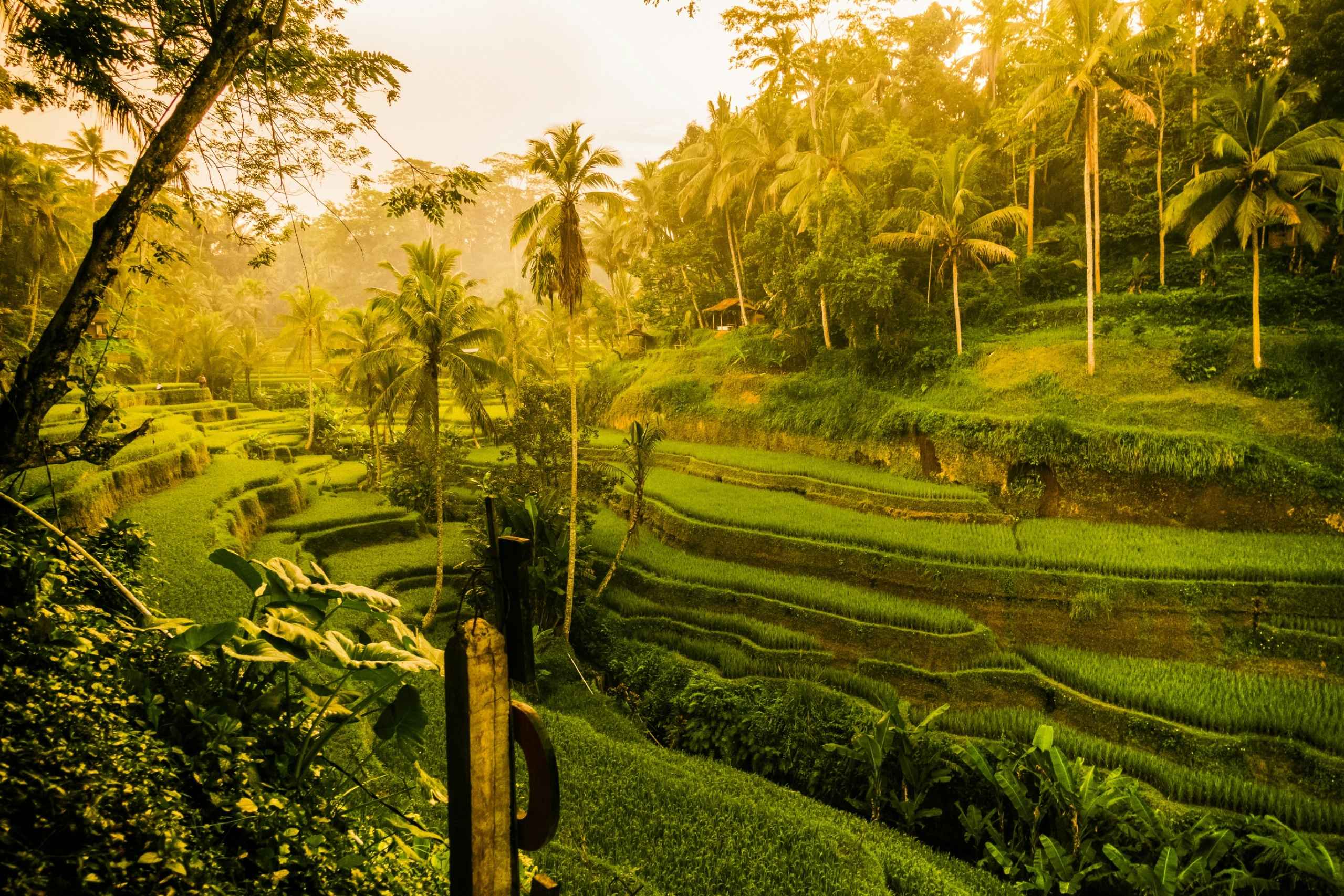

Long before Bali became packed with luxury resorts, beach clubs, and endless streams of international visitors, there was Ubud. Hidden among rice fields and forests, it was once a quiet village that few people outside the island had ever heard of. Yet over the decades, that peaceful place slowly transformed into one of the world’s most recognizable tropical destinations. The journey from an isolated village to a global cultural icon was not shaped by tourism alone. Artists, filmmakers, writers, and scholars all left their marks on the story.
The image of Bali as an exotic paradise did not emerge by accident. Western writers and travelers played a major role in creating the romantic vision that the world came to know. The fascination ran so deep that silent film legend Charlie Chaplin once famously said, “If things come to the worst, we shall go to Bali.”
For many people at the time, Bali represented something distant and almost mythical. Ubud eventually became one of the places that embodied that dream.
Hollywood itself became part of that story. Ubud served as the filming location for one of the final silent movies produced during the Hollywood era. Legong: Dance of the Virgins was filmed there between May and August 1933 and featured an entirely Balinese cast.
The film was directed by Henry de la Falaise. Initially, it was only shown outside the United States because there were concerns about scenes involving female nudity and the controversy they could create. However, those concerns did not stop its success. The film later reached the American market and performed strongly at the box office. It even ran for ten weeks at New York’s World Theater in 1935, an unusually long period at the time.
Another figure who helped shape Ubud’s future arrived several years earlier. Around 1927, Walter Spies, a German artist born in Moscow, came to Ubud and quickly developed a deep connection with the village. He ended up making Ubud his home for the next 14 years.
Spies saw something special in the area long before many others did. He recognized its artistic and creative potential and became one of the key people responsible for introducing Ubud to foreign travelers.
His role extended far beyond painting. He became a cultural bridge between Bali and the Western world. His house evolved into a meeting place for influential names from various fields. Among those who visited were anthropologists Margaret Mead and Gregory Bateson, composer Colin McPhee and his anthropologist wife Jane Belo, as well as dance ethnographer Beryl de Zoete.
At the same time, Bali itself was beginning to take its first steps into tourism.
Read also: Indonesia Steps Up Vigilance as WHO Raises Global Alert Over Ebola Outbreak
Tourism activity on the island started developing during the early 1920s after the Royal Dutch Steam Packet Company included Bali in its travel routes. Visitor numbers were still extremely small by modern standards. Around 1930, the island received only about one hundred visitors annually. Within a decade, that number increased to approximately 250 visitors each year.
Traveling to Bali during that era looked very different from today. Ships anchored offshore near Singaraja, and passengers had to transfer to smaller boats before reaching land. Most tourists then continued their journey by car toward Denpasar, where many stayed at the luxurious Bali Hotel, which officially opened in 1927.
As time passed, Ubud itself experienced major changes.
Beginning in the 1930s and continuing for many years afterward, the village became known as a haven for backpackers, spiritual seekers, and artists searching for inspiration. Travelers arrived with different purposes. Some were chasing artistic ideas, while others were looking for deeper experiences and a slower way of life.
Eventually, the character of its visitors shifted. Ubud evolved into a destination that attracted writers, social elites, art collectors, and lovers of culture.
Even with those changes, Ubud never entirely lost its artistic and spiritual identity. That atmosphere continued attracting well-known personalities from around the world and also made the area a favorite location for filmmakers.
One of the most notable examples came much later through Eat, Pray, Love, which was released on August 13, 2010. The film introduced Ubud to a new generation of global audiences and reignited fascination with Bali as a place of self-discovery and escape.
Ubud’s relationship with artists also continued beyond Walter Spies.
In 1952, Spanish-Filipino painter Antonio Blanco chose to settle there. He fell in love with an Ubud dancer and later transformed his residence into the famous museum that still bears his name today.
International celebrities also became part of Ubud’s long story.
In November 1990, Mick Jagger and Jerry Hall held their iconic Balinese Hindu wedding ceremony in the Ubud area. Around the late 1980s or early 1990s, Michael Jackson also visited Antonio Blanco’s home during his time in Bali.
What began as a small, quiet village eventually became much more than a tourist destination. Ubud turned into a place where art, culture, spirituality, and global attention intersected. Nearly a century later, the fascination remains. Behind the crowds and modern developments, traces of the village that first captivated artists and dreamers still continue to shape its identity.