

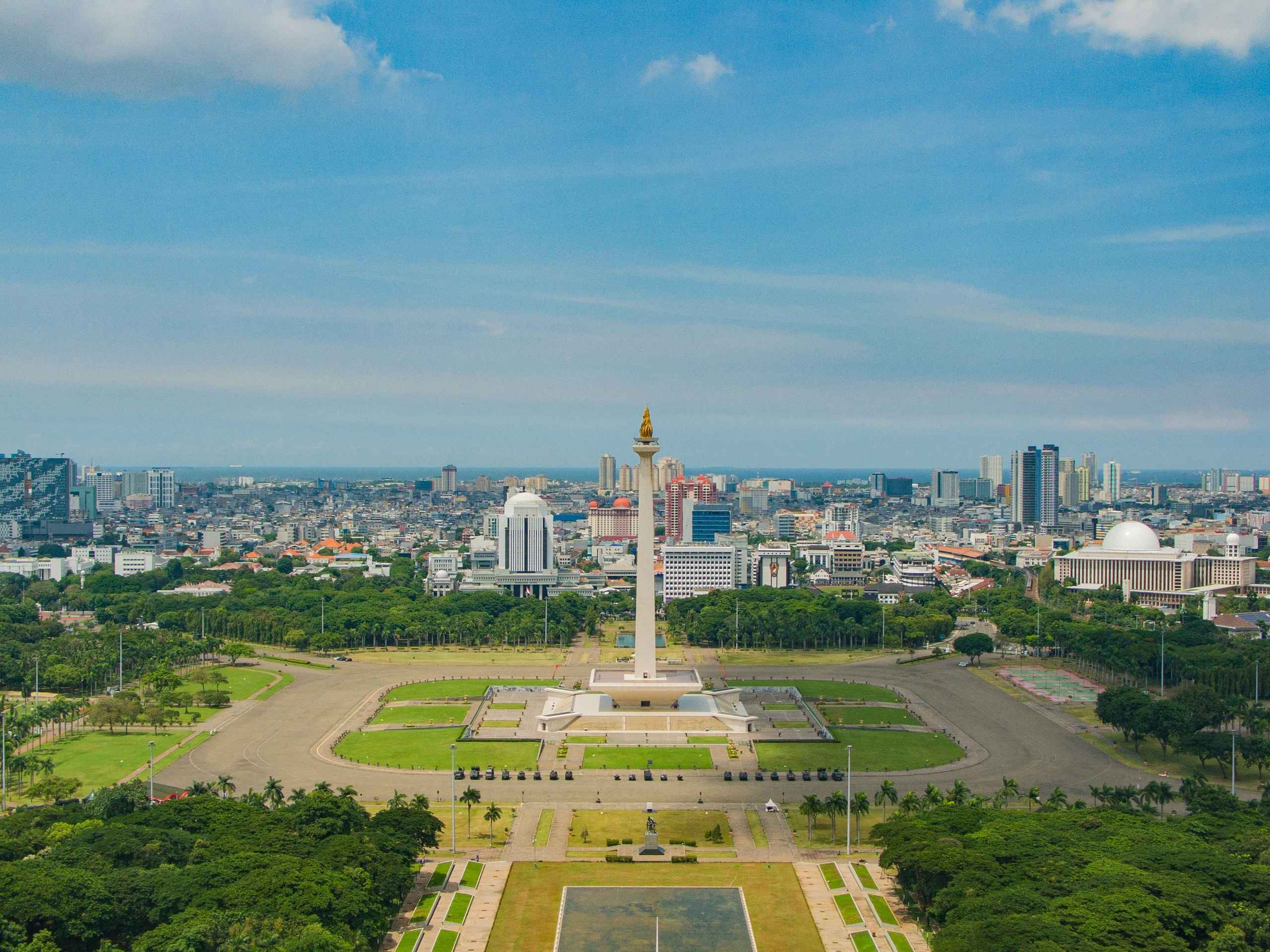

The open lawns of Monas rarely feel quiet, but weekends bring a different kind of energy. From early morning, families and school groups stream through the gates of the National Monument, filling the area with chatter, laughter, and the flutter of birds circling above the grounds. For many visitors, this place still feels special, no matter how many times they come.
Crowds began gathering shortly after sunrise, including tourists from outside Jakarta. Hari, who traveled from Cianjur with his family, said the visit marked his first time at Monas. He looked relaxed, taking in the scene while keeping an eye on his children.
“We chose to come today because we wanted to avoid the crowds. We’re also visiting relatives in Jakarta, so we decided to stop by Monas,” Hari said.
He described the atmosphere as lively and enjoyable. Beyond the wide open spaces, visitors can explore the museum inside the monument or take the elevator up to the top of the tower for a sweeping view of the capital.
“Inside there’s a museum, and from the top of the monument you can see Jakarta,” he added.
Read also: Labuan Bajo Bans Night Sailing for Tourist Boats Following Deadly Accident
For students, the trip is more than sightseeing. It is also a learning experience rooted in history.
Ticket prices at Monas remain affordable for visitors of all ages. Children and students pay Rp3,000 to access the museum and the cawan area, or Rp6,000 to reach the peak. University students are charged Rp5,000 for the museum and cawan, and Rp13,000 for the peak. General adult visitors pay Rp8,000 for the museum and cawan, or Rp24,000 to go all the way up.
One of the highlights inside Monas is the Diorama Museum. Upon entering, visitors step into a dimly lit space filled with national and regional songs playing softly in the background. Several fans help circulate the air. Entry and exit are connected by an orange-lit tunnel, with the exit located between Dioramas 3 and 4.
The area is often crowded. Diorama Side 1 introduces early Indonesian history, from prehistoric societies to the era of Sriwijaya, the construction of Borobudur, and the role of pesantren in uniting the nation. It also depicts major kingdoms such as Majapahit and Bugis Makassar.
Diorama Side 2 focuses on resistance against colonial rule. Scenes include the Pattimura War, the Diponegoro War, the Aceh War, the forced cultivation system, the rise of national awareness, and the role of figures like Kartini.
Moving forward in time, Diorama Side 3 portrays the national movement and the early days of independence. Displays feature Muhammadiyah, Perhimpunan Indonesia, STOVIA, Romusha, the Proclamation of Independence, the ratification of Pancasila and the 1945 Constitution, and the Battle of Surabaya.
Diorama Side 4 tells the story of defending independence through the New Order period. It includes General Sudirman’s guerrilla campaigns, the Asia Africa Conference, Indonesia’s first general election, the liberation of Irian Jaya, and the March 11 Order.
The final section, Diorama Side 5, presents more recent events, such as the 10th Non Aligned Movement Summit in 1992 and the integration of East Timor.
Facilities inside the museum are designed to support long visits. Toilets and prayer rooms are available and separated for men and women. The women’s facilities are located between Dioramas 1 and 2, while the men’s facilities are positioned between Dioramas 2 and 3.
After exploring the museum, visitors can continue to the Monas cawan on the second floor. It is accessible by turning right after ascending from the museum area, offering another pause before stepping back into the lively grounds outside.