




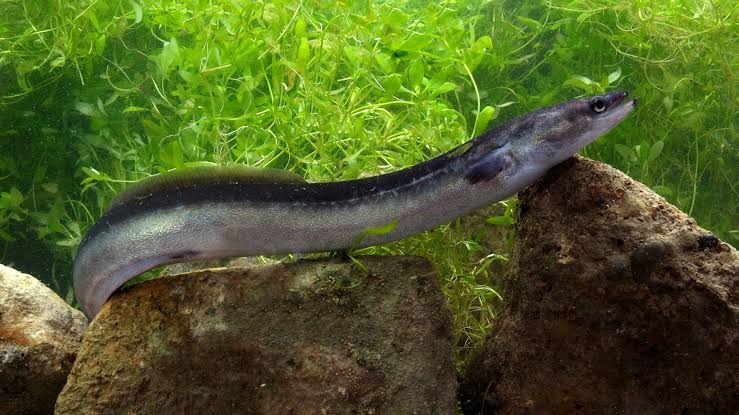

For decades, salmon has been celebrated as the ultimate source of Omega-3. New findings from Indonesia, however, suggest that another fish deserves that reputation. Native Indonesian eel, locally known as sidat, has been found to contain even higher levels of Omega-3 fatty acids than both salmon and snakehead fish, making it one of the country’s most valuable nutritional resources.
The discovery highlights not only the health benefits of eel but also its untapped potential as a strategic fisheries commodity. Alongside its exceptionally high Omega-3 content, eel provides a wide range of essential nutrients, including vitamin A, B-complex vitamins, iron, phosphorus, protein, and calories, making it a highly nutritious food source.
Researchers from Indonesia’s National Research and Innovation Agency (BRIN) believe the public has long underestimated the fish’s nutritional value. According to Gadis Sri Haryani, Principal Researcher at BRIN’s Center for Limnology and Water Resources Research, the long-held belief that salmon contains the highest level of beneficial nutrients is no longer supported by current findings.
“For years, we have always assumed that salmon had the highest nutritional value. In reality, eel (like Indonesian eel) has the highest nutritional content,” she said.
One of eel’s greatest strengths lies in its abundance of Docosahexaenoic Acid (DHA), an Omega-3 fatty acid that plays a vital role in brain development and cognitive function. It also contains high levels of Eicosapentaenoic Acid (EPA), another important Omega-3 compound that helps reduce inflammation while supporting cardiovascular health.
Beyond its nutritional advantages, eel also represents a valuable economic opportunity for Indonesia’s fisheries sector. As demand for nutrient-rich foods continues to grow worldwide, the species has the potential to become an increasingly important commodity.
However, Gadis emphasized that this opportunity must be balanced with responsible management. She warned that increasing demand could lead to overexploitation if proper conservation measures are not implemented. For that reason, she called for a science-based and sustainable management approach to ensure eel populations remain healthy for future generations.
Read also: Indonesia Unveils a Packed 2026–2027 Calendar of World-Class Events
The species is particularly unique because of its catadromous life cycle. Unlike many freshwater fish, Indonesian eel spends most of its life growing in rivers and other freshwater environments before migrating to the ocean to reproduce.
“Catadromous means that after hatching from eggs in the ocean, they become leptocephali, or unique eel larvae, which have flat, transparent, leaf-like bodies and are not yet capable of swimming,” Gadis explained.
Their transformation continues as they migrate toward the coast.
“Then, during their journey from deep ocean waters to estuaries, where freshwater mixes with seawater, these larvae transform into glass eels,” she added.
This remarkable life cycle is one of the reasons eel requires careful conservation. Its survival depends on both healthy freshwater ecosystems and marine environments, making sustainable fisheries management essential throughout every stage of its development.
As awareness of eel’s exceptional nutritional profile continues to grow, the species is gaining recognition not only as a healthy food choice but also as one of Indonesia’s most promising fisheries resources. Combining superior Omega-3 content, impressive nutritional value, and significant economic potential, Indonesia’s native eel could soon become one of the country’s most important aquatic assets, provided its populations are protected through responsible and science-based management.