




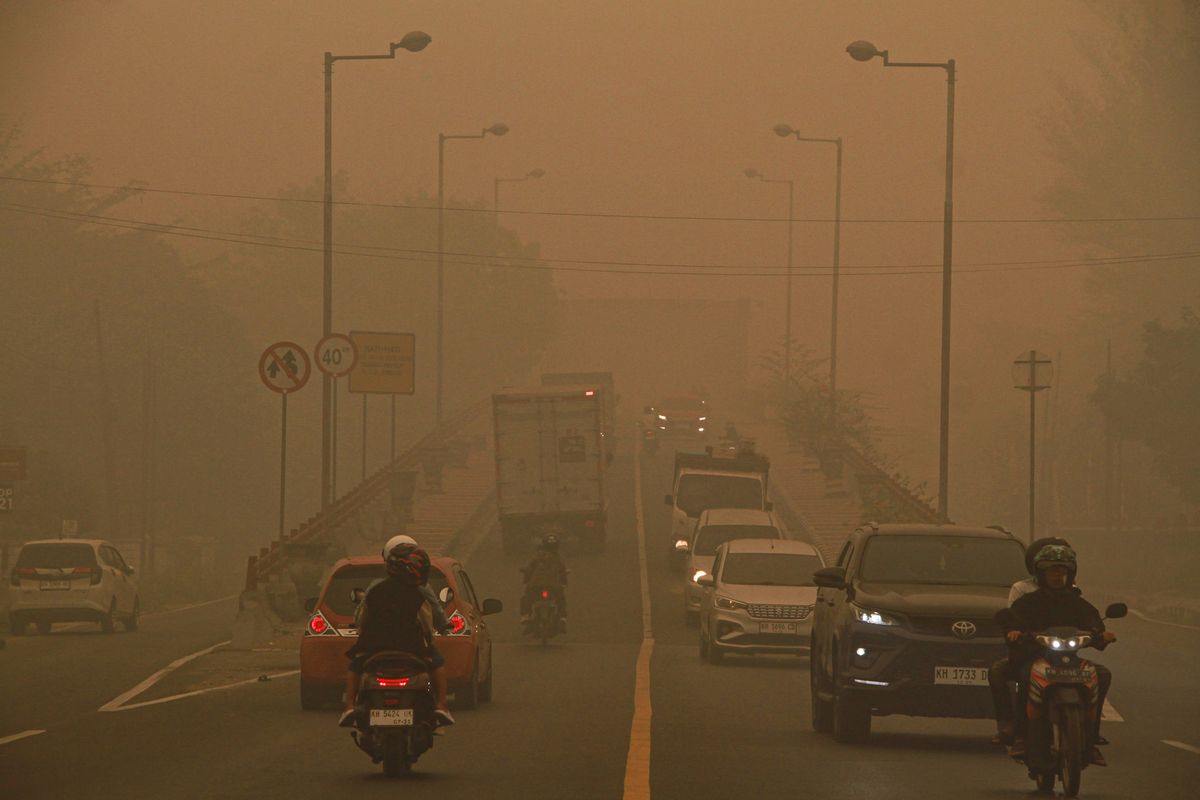

Smoke from forest and land fires in Kalimantan has affected several parts of the region, including Malaysia, Singapore, and Greater Jakarta. Bali, however, has not reported any signs of the haze reaching its territory, according to the island’s Regional Disaster Management Agency (BPBD).
Gede Teja Bhusana, head of BPBD Bali, said the situation aligns with wind patterns during Indonesia’s current dry season. “There shouldn’t be any, because we’re still in the dry season,” he said in Denpasar on Tuesday, October 20, 2026, as reported by Antara.
The direction of the wind is an important factor in determining where smoke travels. Gede Teja explained that easterly winds generally dominate across Indonesia during the dry season, influencing the movement of smoke from forest and land fires. Kalimantan lies to the north of Bali, and smoke from the area is expected to move westward rather than toward the island.
This pattern helps explain why other locations, including Malaysia, Singapore, and the Greater Jakarta area, have experienced the effects of smoke haze. Greater Jakarta, commonly known as Jabodetabek, includes Jakarta, Bogor, Depok, Tangerang, and Bekasi.
BPBD Bali has also consulted the Meteorology, Climatology, and Geophysics Agency (BMKG) to verify whether smoke from fires elsewhere in Indonesia has reached the island. Based on that coordination, no such movement has been detected. “But as far as Bali is concerned, there hasn’t been any. Based on our coordination with BMKG earlier, none has been detected,” Gede Teja said.
He added that BMKG’s main station had likewise reported no observations of smoke from forest and land fires in Kalimantan passing through or entering Bali’s airspace. “But the main station said there was none. Smoke from the forest and land fires in Kalimantan has not entered Bali, so it hasn’t reached us,” he said.
However, the absence of detected haze from Kalimantan does not necessarily explain the air conditions reported by residents in Denpasar. Public complaints emerged after the city’s air quality index reportedly reached 113, a level classified as unhealthy, while the air appeared hazy.
Gede Teja stressed that these conditions should not automatically be attributed to forest and land fires outside Bali. He explained that monitoring the air quality index is the responsibility of the Environmental Agency, meaning that any assessment of the deterioration in Denpasar’s air quality should be based on findings from the relevant authority.
Read also: Where to Enjoy Wellness Experiences in Yogyakarta
“As for the air quality index, I don’t know the details. But the pollution could be coming from sources within Bali rather than from forest and land fires. That falls under the Environmental Agency’s jurisdiction,” he said.
Local sources of pollution may also contribute to the conditions residents have reported. Gede Teja pointed to emissions from power plants and motor vehicles as possible contributors to poor air quality in Bali. Still, identifying the actual causes of the conditions in Denpasar requires further monitoring by the agencies responsible for environmental oversight.
In the meantime, BPBD Bali has urged residents to take precautions to protect their health when spending time outdoors. The agency has also encouraged the public to follow official information from the relevant authorities for updates on environmental conditions and air quality.
While officials have not detected smoke from Kalimantan’s forest and land fires reaching Bali, reports of unhealthy air quality in Denpasar remain a separate concern. Determining the source of that pollution will depend on monitoring by the appropriate authorities, while residents are advised to stay informed and take care when engaging in outdoor activities.