


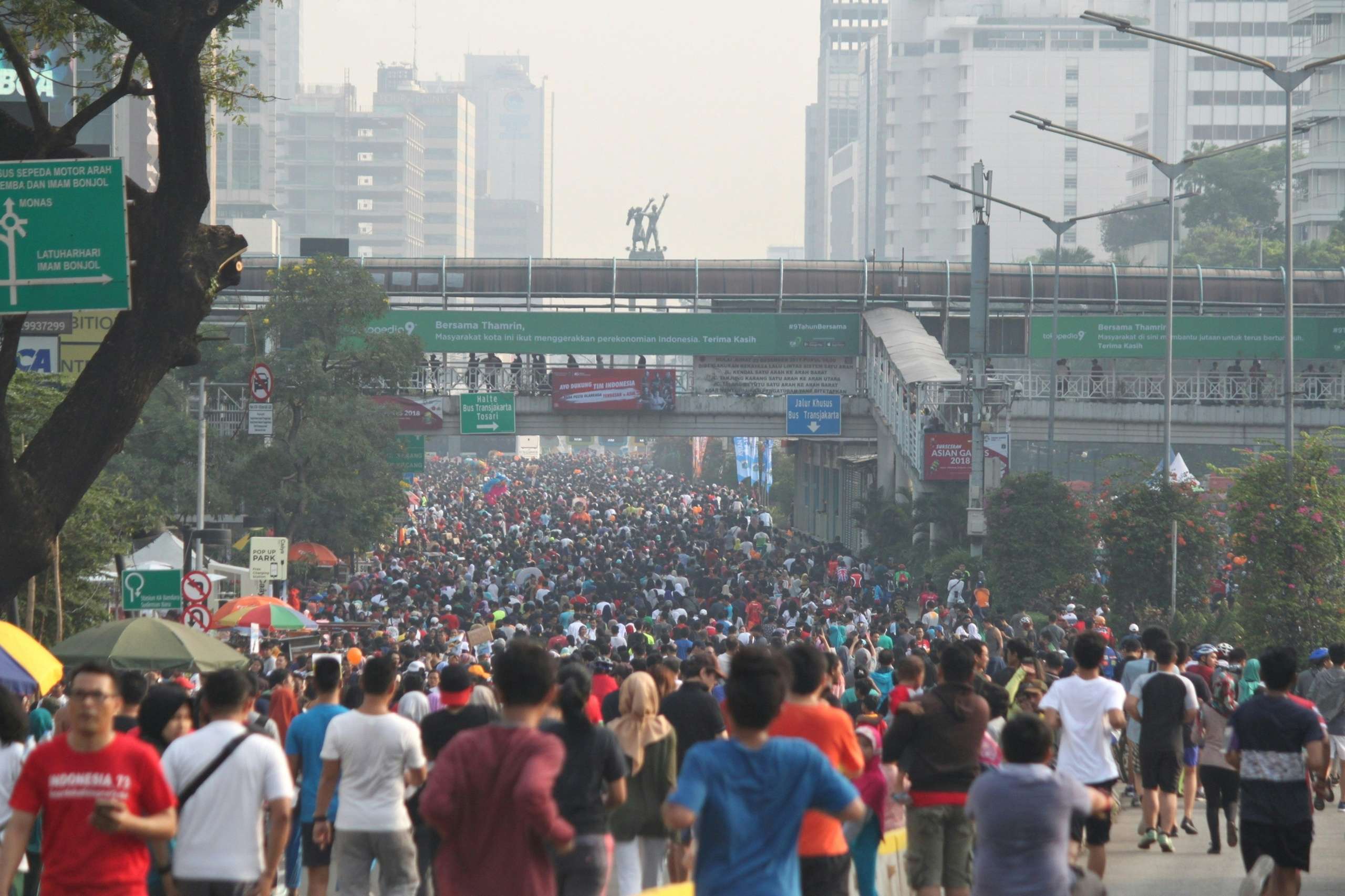

A major shift has taken place in the global urban landscape. Jakarta has officially emerged as the world’s most populous city, surpassing long-established megacities that have dominated international rankings for decades. According to the latest United Nations (UN) data released at the end of 2025, population in Jakarta is nearly 42 million people, putting it ahead of cities such as Tokyo, Shanghai, and Seoul.
The report estimates population in Jakarta at 41.9 million residents, making it the largest urban agglomeration on the planet under the UN’s updated methodology. The Indonesian capital now sits comfortably at the top of the list, while Dhaka, Bangladesh, follows in second place with 36.6 million people. Tokyo, once considered the world’s largest metropolitan area, has dropped to third with a population of 33.4 million.
Although Jakarta now leads the rankings, Dhaka has recorded the most dramatic rise. The Bangladeshi capital previously ranked ninth but has climbed rapidly in recent years. The UN believes this growth will continue, projecting that Dhaka could eventually become the world’s largest city by 2050.
Population expansion in both Jakarta and Dhaka has largely been fueled by massive migration from rural communities into urban centers. People continue moving to cities in search of better economic opportunities, creating sustained growth across both metropolitan regions.
In Bangladesh, migration has also been intensified by climate-related pressures. Worsening floods and rising sea levels have forced many residents to leave vulnerable areas and relocate to cities, further accelerating Dhaka’s population growth.
Jakarta faces environmental pressures of its own. The city continues to struggle with severe land subsidence while rising sea levels add to the long-term risks. Current estimates suggest that by 2050, approximately one-quarter of Jakarta could fall below sea level, making climate adaptation an increasingly urgent priority.
Read also: International Travelers Explore More of Indonesia Beyond Bali in Summer 2026
Despite these environmental concerns, the city’s population is not expected to slow anytime soon. The UN projects that Jakarta will add another 10 million residents over the next 25 years, reinforcing its position as one of the fastest-growing urban centers in the world.
The latest rankings also reflect an important change in how the UN measures cities. Rather than relying on national administrative boundaries, the organization now uses a standardized global definition to ensure more consistent comparisons between countries.
Under this revised methodology, a city is defined as a continuous urban agglomeration composed of adjacent one-kilometer grid cells. Each grid cell must have a minimum population density of 1,500 people, while the overall urban area must contain at least 50,000 residents.
The revised approach has significantly reshaped the rankings of major cities around the world. Tehran provides one clear example. Using the updated definition, the Iranian capital now has a recorded population of 9 million people while simultaneously confronting a severe water crisis that has forced authorities to implement water distribution restrictions.
According to the latest UN report, the world’s most populous cities are:
- Jakarta, Indonesia: 41.9 million people
- Dhaka, Bangladesh: 36.6 million people
- Tokyo, Japan: 33.4 million people
- New Delhi, India: 30.2 million people
- Shanghai, China: 29.6 million people
- Guangzhou, China: 27.6 million people
- Manila, Philippines: 24.7 million people
- Kolkata, India: 22.5 million people
- Seoul, South Korea: 22.5 million people











 data released at the end of 2025, population in Jakarta is nearly 42 million people)