


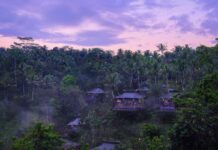



Indonesia is taking a new approach to tourism by turning the stories, traditions, and distinctive products of local communities into part of the visitor experience. The initiative, known as Geographical Indication Tourism (GI Tourism), has officially started in Central Java, with the Dieng highlands selected as its first development area. The program aims to connect geographically recognized local products with tourism activities, creating new economic opportunities for farmers, small businesses, and surrounding communities.
The official launch took place on Wednesday, November 18, 2026, across the Dieng area of Wonosobo and Banjarnegara Regencies. The selection of Dieng reflects the region’s combination of agricultural potential, natural landscapes, and cultural heritage, all of which can support a tourism model built around local identity.
Central Java Deputy Governor Taj Yasin Maimoen welcomed the decision to make Dieng the starting point for GI Tourism in Indonesia. He said the initiative supports the provincial government’s broader tourism direction, particularly its plan to designate 2027 as the year of sustainable Muslim-friendly tourism.
“This is also in line with the Central Java Provincial Government’s policy of declaring 2027 the year of sustainable Muslim-friendly tourism,” Taj Yasin said in an official statement released on Thursday, November 19, 2026.
For Taj Yasin, tourism development should make greater use of the products and knowledge that already exist within local communities. Natural attractions remain important, but regional specialties can provide another reason for visitors to explore a destination. By introducing these products as part of the tourism experience, local farmers and micro, small, and medium-sized enterprises (MSMEs) can gain additional economic opportunities.
Dieng already has three registered geographical indication products that will form the foundation of the initiative. They are Dieng Banjarnegara Arabica Coffee, Dieng Carica, and Dieng Purwaceng. Each represents a product associated with the region’s geographical characteristics and local identity.
However, the potential extends well beyond these three products. Taj Yasin pointed out that Wonosobo and Banjarnegara alone have thousands of local products that could receive stronger recognition and protection through intellectual property rights. Central Java has 35 regencies and cities, creating considerable opportunities to expand this support across the province.
To make that possible, the provincial government is seeking assistance from the central government, particularly the Ministry of Law, to facilitate intellectual property rights (IPR) protection for local MSMEs. Such support would help businesses strengthen the identity of their products while providing legal protection for the distinctive qualities associated with their regions.
Read also: Giant Sea Wall Construction Set to Begin in 2027 to Address Coastal Flooding in Java
“We need support from the ministry to facilitate intellectual property rights assistance for MSMEs throughout Central Java,” Taj Yasin stated.
The Deputy Governor, who is widely known as Gus Yasin, also raised concerns about accessibility to Dieng. He stressed that improvements to roads and supporting infrastructure would be important for attracting more visitors. Better access could help the destination appeal to different market segments, including travelers with greater spending capacity.
“We hope that more mid-range and high-end tourists will also visit Central Java, particularly this area of Dieng,” he said.
The central government also sees Dieng as a suitable location for introducing this tourism concept. Minister of Law Supratman Andi Agtas revealed that Indonesia currently has 281 registered geographical indication products, placing the country first in Asia and ahead of Thailand.
He explained that Dieng offers a combination of natural, agricultural, and cultural resources that makes it particularly relevant to the GI Tourism approach. Its volcanic geographical conditions have produced fertile land that supports distinctive agricultural products. At the same time, the region’s cultural heritage sites and temple complexes provide additional attractions that visitors can explore.
Supratman described the area as an attraction that still has considerable potential to gain international recognition.
“Dieng is a hidden gem that may not yet be widely known to the outside world,” he said.
Through GI Tourism, the Ministry of Law aims to change how geographical indication products are introduced to visitors. Rather than presenting them solely as goods for sale, the program will connect each product with the place, people, and traditions behind its production. This gives tourists an opportunity to understand why certain products are distinctive and how local geographical conditions contribute to their characteristics.
The approach also reflects changing preferences among travelers. Deputy Minister of Tourism Ni Luh Puspa noted that more tourists are now looking for authentic experiences when choosing destinations. Beautiful scenery remains attractive, but visitors increasingly want to discover local culture, learn the stories behind regional specialties, and understand the daily lives of people in the areas they visit.
She believes GI Tourism can bring these elements together by making local products an integral part of tourism activities. The approach is expected to help distribute tourism revenue more widely, ensuring that farmers, MSMEs, and other community members can benefit from the arrival of visitors.
“GI Tourism brings local uniqueness to the world and introduces the stories behind it,” Ni Luh Puspa said.
The launch in Dieng also included practical support for local producers. During the event, the government distributed People’s Business Credit (Kredit Usaha Rakyat/KUR) to 10 farmers. This financing support is intended to help agricultural businesses access funding for their operations and development.
Another important moment was the presentation of a collective trademark certificate for Dieng Banjarnegara Arabica Coffee to the Central Java Deputy Governor. The certificate represents an effort to strengthen the collective identity of the region’s coffee producers and support the recognition of their product.
The event concluded with the planting and watering of purwaceng, a traditional medicinal plant closely associated with the Dieng highlands. The activity served as a symbol of preserving the area’s natural heritage and maintaining its sustainability for future generations.
With Dieng becoming Indonesia’s first GI Tourism development area, Central Java is positioning its regional products as an important part of its tourism strategy. The initiative brings together geographical indication protection, cultural preservation, agricultural development, and destination promotion. Its broader objective is to ensure that tourism growth creates economic opportunities for the communities responsible for maintaining the region’s distinctive identity.








, has officially started in Central Java, with the Dieng highlands...)