



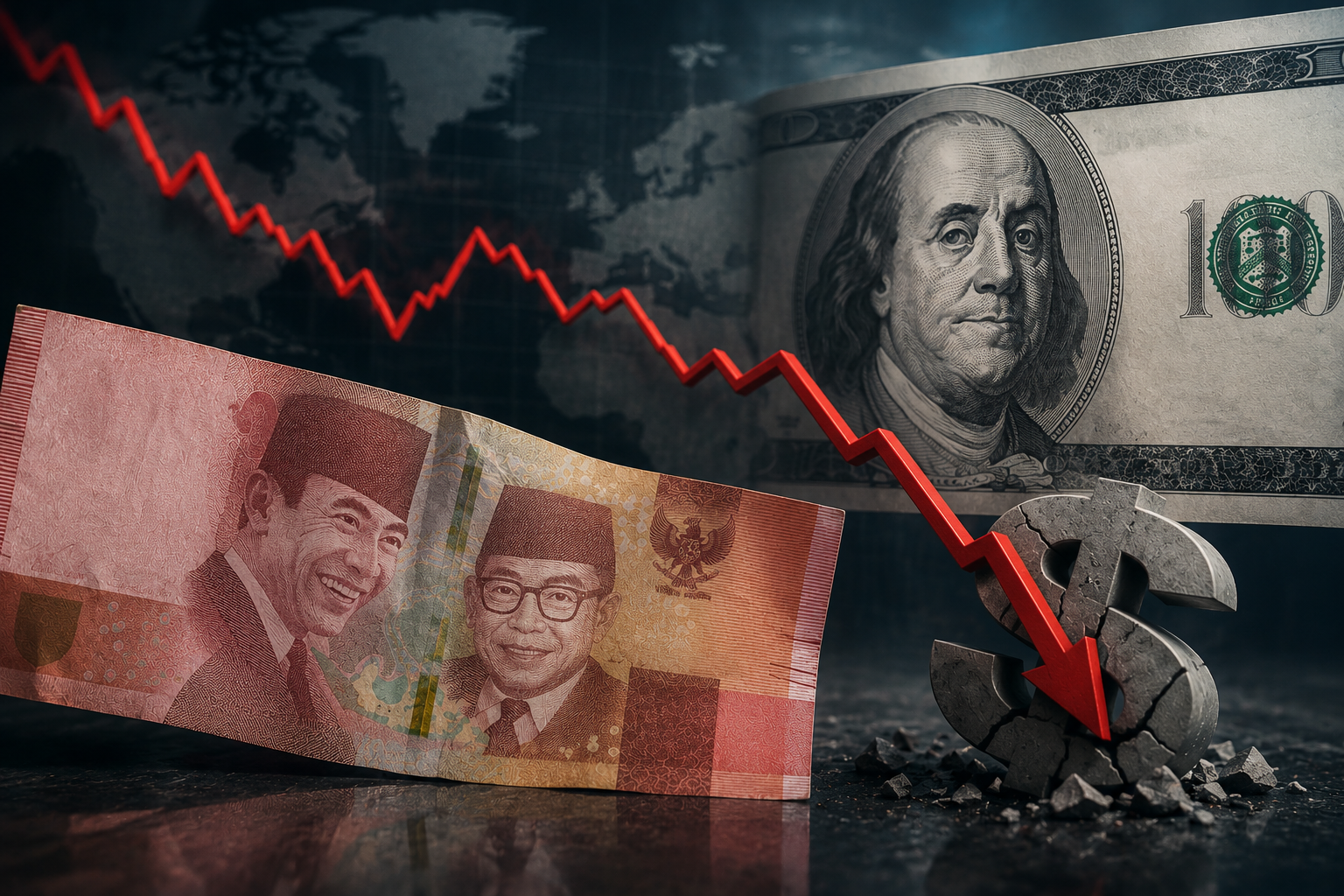

The rupiah has entered uncharted territory. On June 4, 2026, Indonesia’s currency weakened beyond the psychological threshold of Rp18,000 against the US dollar, reaching Rp18,040 per US dollar by 11:20 a.m. WIB, according to Refinitiv data. The figure marks the weakest exchange rate ever recorded for the rupiah and has renewed concerns about external pressures facing the Indonesian economy.
Despite the historic decline, Bank Indonesia believes the currency’s movement is largely being driven by global developments rather than domestic fundamentals. Deputy Governor Destry Damayanti pointed to the renewed escalation of tensions in the Middle East as one of the main factors behind the rupiah’s depreciation.
According to Destry, the worsening geopolitical situation has reduced hopes for a peaceful resolution in the region. As a result, global oil prices have remained elevated, increasing inflation risks worldwide and encouraging investors to shift funds away from emerging markets.
“In addition, domestic demand for dollars remains relatively high, following the usual pattern of dividend repatriation and external debt repayments,” Destry said in a message to CNBC Indonesia on Thursday, June 4, 2026.
Read also: Ancol Opens Free Evening Access for Visitors from June 8-19, 2026
The pressure on the rupiah is also being amplified by demand for foreign currency within Indonesia. Companies continue to require US dollars for dividend repatriation and payments related to overseas debt obligations, creating additional strain on the local currency.
To address the situation, Bank Indonesia has pledged to remain active in financial markets. The central bank said it will intensify intervention efforts to ensure orderly market conditions while keeping the rupiah aligned with its underlying economic fundamentals.
Destry explained that the central bank is also strengthening the interest rate structure of its pro-market monetary instruments. The goal is to maintain the attractiveness of Indonesian financial assets and encourage continued capital inflows from global investors.
Several intervention tools are being deployed simultaneously. Bank Indonesia will continue conducting Non-Deliverable Forward (NDF) transactions in offshore markets while also intervening through spot market operations and Domestic Non-Deliverable Forward (DNDF) transactions within the domestic market. In addition, the central bank will keep purchasing government bonds in the secondary market as part of its stabilization strategy.
“Coordination and communication with corporations and other market participants continue to be carried out intensively,” she said.
Beyond direct market intervention, Bank Indonesia is also pursuing longer-term measures aimed at reducing reliance on the US dollar. One of those efforts involves expanding the use of local currencies in international trade and financial transactions through the Local Currency Transaction (LCT) framework.
The LCT initiative has already been established with several countries, including China, Japan, Malaysia, Thailand, South Korea, and the United Arab Emirates. The program is intended to lessen dependence on dollar-based transactions while helping businesses manage exchange rate volatility more effectively.
According to Destry, the value of trade transactions conducted through the LCT framework continues to grow. In April 2026, transaction volumes reached approximately US$22.7 billion, compared with around US$25.7 billion recorded in the previous year.
Although the rupiah’s decline has drawn significant attention, Bank Indonesia noted that the currency’s performance remains broadly consistent with movements seen across the region. On a year-to-date basis, the rupiah has depreciated by 7.44 percent.
At the same time, Indonesia’s external financial position remains relatively solid. The central bank reported that foreign exchange reserves stood at US$146.2 billion at the end of May 2026, providing an important buffer against external shocks and helping support overall financial stability.
The latest plunge in the rupiah highlights how global geopolitical tensions can quickly ripple through emerging markets. While external pressures continue to weigh on the currency, Bank Indonesia insists it will maintain a strong presence in financial markets through intervention measures, policy support, and international cooperation to safeguard exchange rate stability and preserve confidence in the Indonesian economy.