




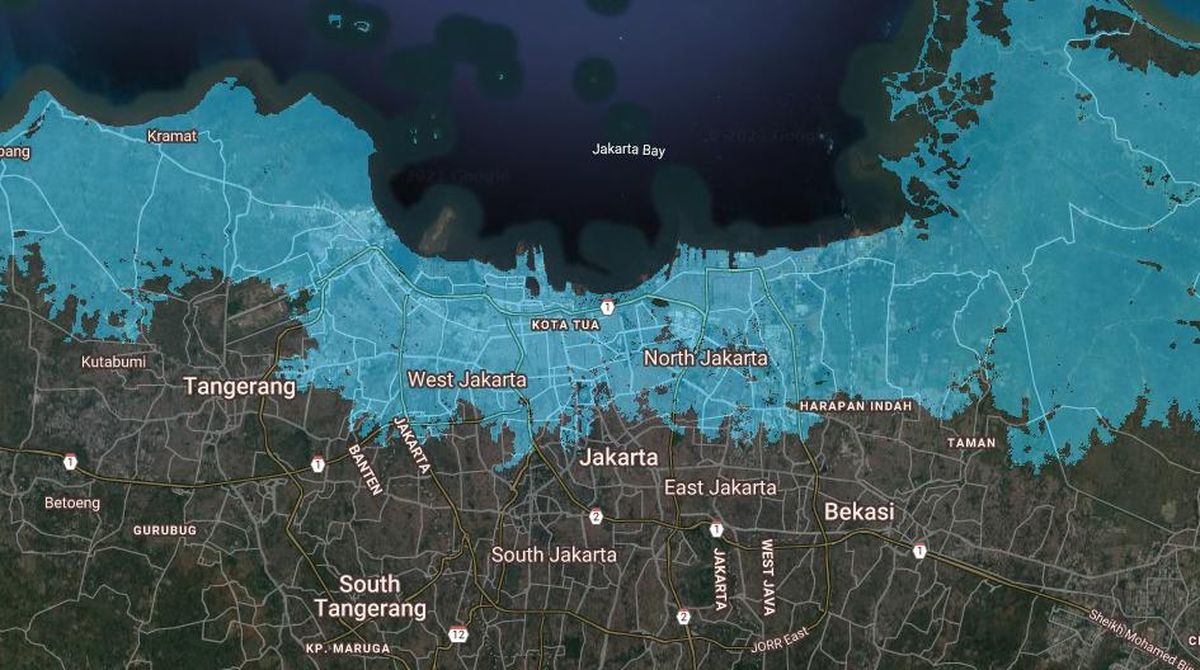

Asia is heading toward a climate tipping point, and Indonesia stands at the heart of the crisis. The World Meteorological Organization (WMO) has issued a stark warning about worsening climate conditions across the continent, describing a grim future filled with extreme heat, massive floods, and the potential sinking of thousands of islands if immediate action is not taken to address the climate crisis.
In its State of the Climate in Asia 2023 report, WMO highlights how the region is heating up at an alarming rate. Surface temperatures are rising, glaciers are melting, and sea levels are climbing faster than ever before. The organization identifies Asia as the most disaster-prone region on Earth when it comes to weather-related events. Since the period of 1961 to 1990, Asia has been warming almost twice as fast as the global average.
“The conclusions of this report are a wake-up call for all of us,” said WMO Secretary-General Celeste Saulo, quoted on Saturday (November 1, 2025). Her statement reflects growing concern about how quickly the region’s climate is deteriorating.
The data shows that 2023 was among the hottest years in Asia’s history. The continent faced an onslaught of extreme weather—from heatwaves and severe droughts to powerful storms and widespread floods. These events have not only claimed lives but also disrupted economies, threatened public health, and endangered communities across the region.
In just one year, Asia experienced 79 hydrometeorological disasters. More than 80 percent of these were floods and storms, resulting in over 2,000 deaths and affecting about nine million people. Although no fatalities were reported from heatwaves, the WMO warned that long-term health effects from rising temperatures continue to increase and pose serious risks.
Read also: Bali Online Tourist Drivers Now Limited to Local Residents Only
“Once again, vulnerable countries are disproportionately affected,” said Armida Salsiah Alisjahbana, Executive Secretary of the UN Economic and Social Commission for Asia and the Pacific (ESCAP). She pointed to Tropical Cyclone Mocha, which hit Bangladesh and Myanmar in 2023, as the strongest storm to strike the Bay of Bengal in the past ten years. “Better early warning systems and preparedness have saved thousands of lives,” she added, emphasizing how improved disaster readiness has reduced casualties.
Yet the threat does not stop there. Rising sea levels are adding another layer of danger. According to WMO data, the Global Mean Sea Level rose by 3.4 ± 0.33 millimeters per year between January 1993 and May 2023. Indonesia, marked in yellow on WMO’s warning map, is among the countries experiencing sea-level rise above the global average.
This pattern supports a 2016 USAID report predicting that 2,000 small islands in Indonesia could sink by 2050. Such a scenario would endanger more than 42 million people living along coastal areas, many of whom rely on the sea for their livelihoods.
The United Nations warns that without strong adaptation and mitigation efforts, island nations like Indonesia will face unavoidable climate disasters. The potential consequences include shrinking land areas, massive displacement, and the rise of climate refugees in the near future. The message from the global scientific community is clear: without urgent, coordinated action, the climate crisis will reshape the region’s geography and threaten the survival of millions.











..)