




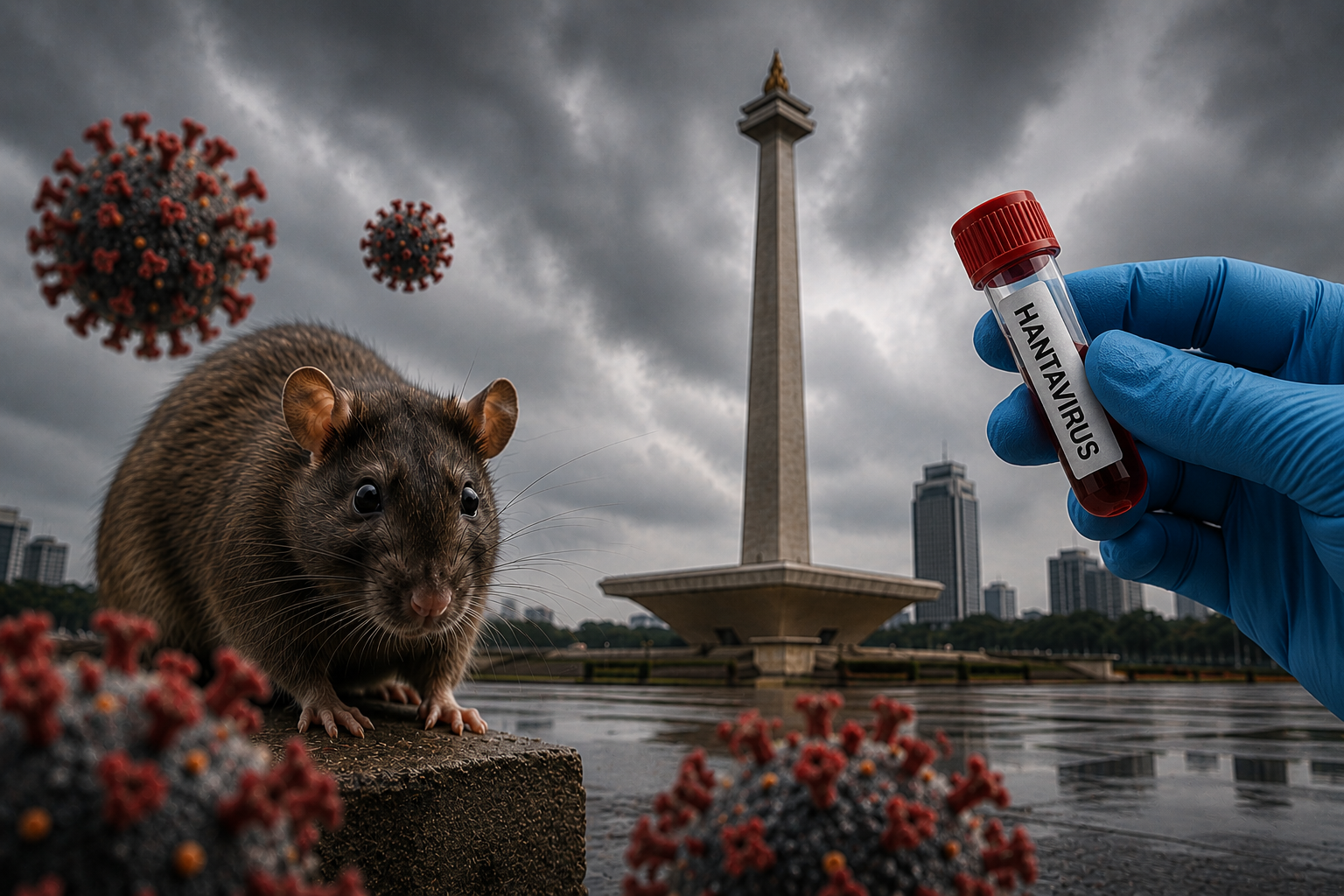

Public concern over hantavirus has started to grow in Indonesia after several cases were detected in Jakarta during 2026. Still, health officials insist there is no reason to panic. The virus may sound alarming, especially after recent global health scares, but authorities say the situation remains under control and the symptoms found so far in Jakarta have been relatively mild.
The Jakarta Health Agency confirmed that four hantavirus cases have been identified in the capital this year. According to Jakarta Health Agency Head Ani Ruspitawati, three patients have already recovered, while one case is still under further examination.
“In 2026, according to our records up to now, we have identified four cases. Three people have recovered with mild symptoms. One patient is still suspected and the diagnosis must still be confirmed through laboratory testing. It has not been fully confirmed yet and remains a suspected case,” Ani said during a meeting at the Jakarta Regional House of Representatives on Monday, May 11.
Ani explained that hantavirus is not considered a newly emerging disease like COVID-19 once was. The virus has existed for years and has already been part of routine monitoring by health authorities.
“Hantavirus is actually an old virus, not a new one. It is different from COVID because COVID was a new emerging disease. This is an older virus that has actually been monitored every year,” she said.
Read also: Batam Investment Surges Past Rp17 Trillion in First Quarter of 2026
The virus is commonly transmitted from rats to humans. Transmission can occur through exposure to rat saliva, urine, or droppings that contaminate surrounding environments. In some cases, people can become infected after inhaling contaminated dust particles.
“The transmission comes through rats, saliva, urine, rat droppings, which contaminate humans or when contaminated dust is inhaled by humans,” Ani explained.
Health officials also emphasized that there are many different hantavirus variants. However, only one variant, known as Andes virus, has been proven capable of spreading between humans. According to the World Health Organization, the Andes variant has only been found in South America and has not been detected in Indonesia.
“The only variant that can spread between humans, based on WHO explanations, is Andes, which was found in South America. And until now, Andes has not existed in Indonesia,” she stated.
The one suspected patient currently under monitoring is being treated carefully in an isolation room while waiting for laboratory confirmation. Authorities said the isolation procedure is part of standard precautions for infectious diseases.
“Yes, the patient is being treated in a special room, in isolation, because it falls under the category of infectious diseases,” Ani said.
So far, all recorded hantavirus cases in Jakarta have shown mild symptoms. Still, the Jakarta Health Agency continues to urge residents to stay alert, especially in environments that may have heavy rat exposure.
Residents are advised to maintain hygiene, clean potentially contaminated areas properly, and wear masks when entering places considered at risk of rodent contamination.
Despite the warnings, officials repeatedly stressed that the public should remain calm.
“The important thing is not to panic, but to stay alert. What matters most is maintaining a clean and healthy lifestyle,” Ani said.
The government believes public awareness and clean living habits remain the most important steps in preventing further transmission while monitoring efforts continue across the capital.