



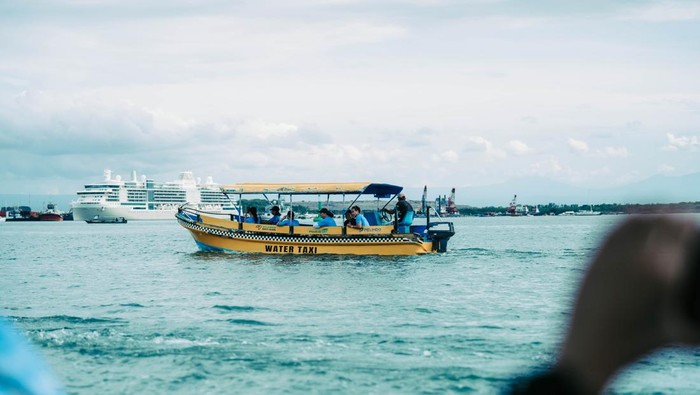

The government is moving forward with plans to introduce water taxi services in Bali. This new transport mode is designed to connect I Gusti Ngurah Rai Airport directly with Canggu, an area known for intense daily movement. The idea is simple, but the impact could be significant. A trip that usually takes up to two hours by road could be cut down to just 30 minutes by sea.
Traffic in Bali can quietly shape the entire travel experience. What should feel like a short journey often turns into hours on the road, especially in busy tourism corridors. That reality is now pushing a different kind of solution. One that moves away from land and into the sea.
This initiative is not just about convenience. It reflects a broader effort to respond to Bali’s growing mobility challenges. As tourism continues to expand, the pressure on existing infrastructure becomes harder to manage. A sea-based alternative offers a different path forward.
“The development of water taxi services is part of our commitment to supporting government policies in creating an integrated transportation system. We hope this service can become an efficient, safe, and comfortable alternative for both the public and tourists,” said ASDP President Director Heru Widodo in a statement on Monday (April 20, 2026).
Support for the project also comes from the Ministry of Transportation. Transportation Minister Dudy Purwagandhi sees water taxis as more than just a new option. He views them as a way to connect different transport modes while easing congestion, especially in Badung Regency, where tourism activity is concentrated.
Before moving further, ASDP and PT Angkasa Pura Indonesia have completed a feasibility study. The results show that the project has strong potential to continue. The evaluation covered several aspects, including market demand, technical feasibility, and possible social and environmental impacts.
From this study, one route stood out. The Sekeh to Canggu route, specifically toward Berawa, was chosen as the main priority. This route is considered the most effective in delivering immediate benefits for both tourists and local communities.
The decision did not come lightly. It was based on a full assessment that included maritime safety considerations and the readiness of supporting infrastructure.
Read also: Air Ticket Prices Surge but Bali Tourism Remains Strong
“Through this approach, the water taxi service is expected to be not only efficient but also safe and well integrated with Bali’s tourism ecosystem,” said ASDP Corporate Secretary Windy Andale.
At this stage, the project is moving into more technical preparation. Work is underway to finalize the Detailed Engineering Design, along with the necessary licensing process. ASDP and Angkasa Pura Indonesia aim to complete these steps within 2026 before submitting the project back to the government for the next phase of approval.
Looking ahead, the water taxi is not positioned as a short-term fix. It is part of a larger vision. The goal is to build a transport system that is more connected, more efficient, and more sustainable. For Bali, this could mean a shift in how people move across one of Indonesia’s most important destinations.