


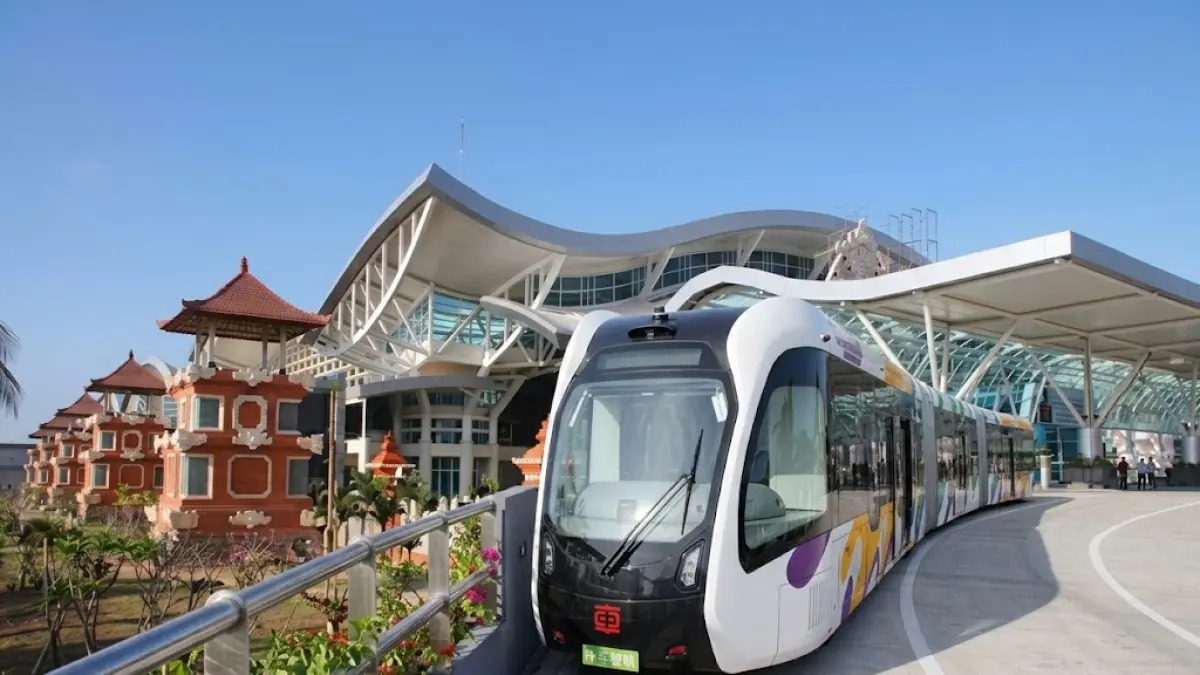

Bali is preparing for a major shift in how people move around the island. A new mass transit system is being planned to connect Kuta with Canggu in North Kuta, Badung. The planned system will use Autonomous Rail Transit (ART), also described as a Bali tram.
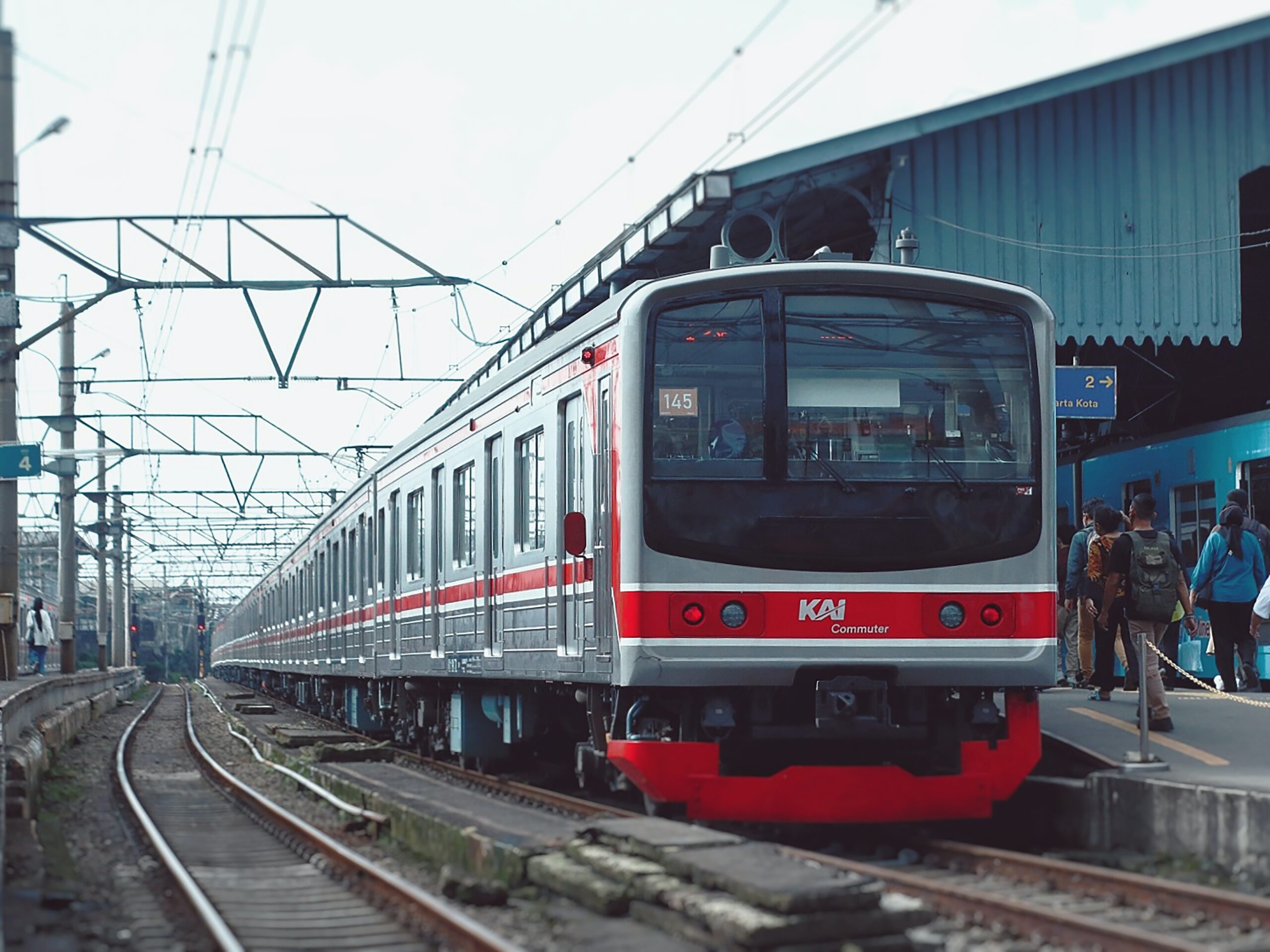
PT Kereta Api Indonesia (KAI) is expected to build and operate the service. The Bali tram will run on a dedicated track. This is part of a wider plan to tackle one of Bali’s most persistent problems: traffic congestion.
Traffic has become a familiar problem in Bali, especially as tourism and economic activity continue to grow. The local government sees mass transportation as one way to reduce pressure on the roads. But the plan goes beyond simply moving people faster.
Badung Regent I Wayan Adi Arnawa believes better rail connectivity could also reshape how people live and work across Bali.
“For Bali, besides the toll road, the priority should be developing intercity railway connectivity because it will be much more effective. That way, people can live anywhere and commute to work in Badung or Denpasar. What matters is having a reliable commuter system,” Adi Arnawa said during a meeting with PT KAI’s directors, according to a statement received by detikBali on Wednesday, August 5, 2026.
The idea is to make commuting between different parts of Bali easier. People wouldn’t necessarily have to live near their workplaces. Better connectivity could also help reduce the gap between developed areas and regions that have grown more slowly.
The planned rail infrastructure is being viewed as more than a transportation project.
Read also: Mount Bromo Completely Closed as Wildfire Spreads Across TNBTS
Officials believe stronger connectivity can encourage the development of new areas. It could also spread economic activity more evenly across Bali.
The logic is simple. When a less-developed area is connected to an established economic center, residents can work in one place while continuing to live and spend money in their hometown.
“An area will develop when it has connectivity with an area that is already developed. That’s the formula. Imagine someone from Klungkung who can continue living in Klungkung while earning money in Denpasar and spending that money in Klungkung. That way, the local economy can keep moving,” Adi Arnawa said.
This tram model could allow communities outside main economic centers in Bali to benefit from growth in Badung and Denpasar.
Instead of forcing workers to relocate, better public transportation could make daily commuting a more realistic option.
The Badung Regency Government is also preparing supporting infrastructure for the future ART system.
One of the main plans is to widen existing major roads and create a dedicated corridor for the tram.
The dedicated track is considered essential. Without one, the public transportation system could end up facing the same traffic congestion it is supposed to solve.
The planned road will have a total width of 24 meters. That space will need to accommodate several components, including the median, sidewalks, and the required Building Boundary Line, or Garis Sempadan Bangunan (GSB).
“Public transportation will fail if we build it without a dedicated track. From my experience, if the road is eventually 24 meters wide, I would allocate 1 meter for the median, then 2 meters on each side for sidewalks, while the 3-meter GSB requirement would also apply,” Adi Arnawa explained.
The infrastructure plan therefore combines the tram corridor with wider roads and pedestrian facilities.
For Bali, the proposed ART system could become an important part of a broader effort to improve mobility. The project is expected to connect major areas, support daily commuting, and potentially spread economic activity beyond the island’s busiest centers.