




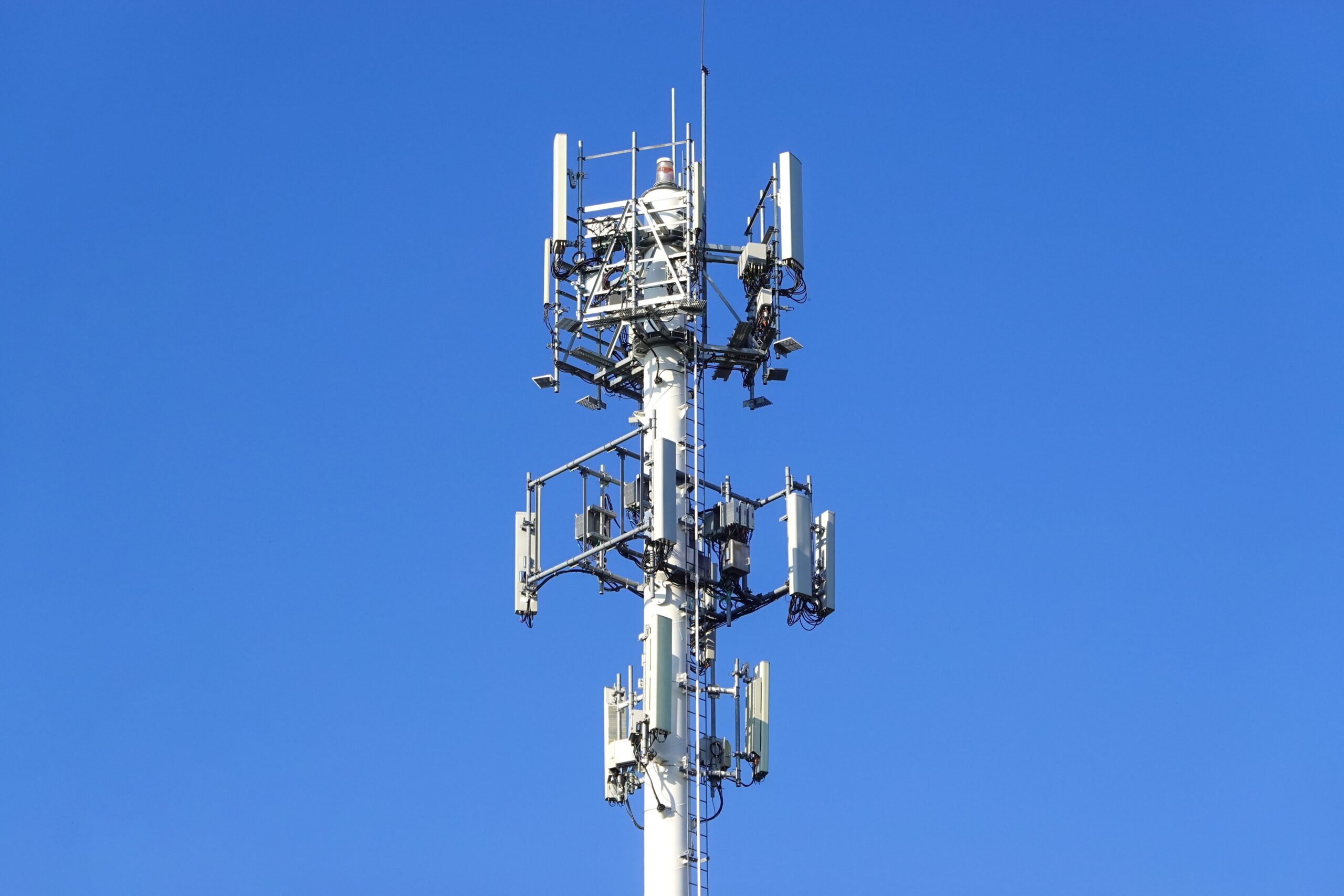

Artificial intelligence may soon become the driving force behind Indonesia’s next wave of digital infrastructure growth. As demand for AI-powered services rises, the government believes the technology could finally provide the breakthrough use case needed to accelerate the adoption of 5G networks across the country.
The Ministry of Communication and Digital Affairs (Komdigi) sees AI as a potential “killer content” for 5G networks, a role that the telecommunications industry has been seeking for years. According to Denny Setiawan, Director of Digital Infrastructure Strategy and Policy at Komdigi, telecom operators have long searched for a primary application capable of justifying large-scale investments in fifth-generation network infrastructure.
The rapid expansion of AI-based platforms is now emerging as a strong candidate. Denny believes the technology could help address one of the industry’s biggest challenges, namely generating sustainable returns from investments in next-generation network infrastructure.
“Perhaps AI is the killer content, and it certainly seems that way,” Denny said, as quoted by Antara on Tuesday, June 9, 2026.
The connection between AI and 5G is becoming increasingly clear as both technologies rely on similar technical requirements. Modern AI systems operate through advanced algorithms that require extremely low latency and substantial bandwidth capacity. These demands place significant pressure on existing network infrastructure.
According to Denny, current fourth-generation networks were largely built around a different pattern of internet usage. During the 4G era, online activity was dominated by downloading content and consuming data. The rise of AI, however, is expected to create a much more complex flow of information.
Future AI applications will require continuous interactions, real-time processing, and faster exchanges of data. Such conditions demand stronger and more advanced network infrastructure capable of handling increasingly sophisticated traffic patterns.
Because of this, Komdigi believes the development of AI capabilities and the expansion of 5G networks cannot be separated. Both technologies need to grow together if Indonesia wants to maximize their economic impact.
The ministry views the synchronization of AI and 5G development as a crucial step toward creating new sources of economic value. In the long run, stronger adoption of both technologies could significantly increase the contribution of the digital economy to Indonesia’s gross domestic product (GDP).
Beyond telecommunications, the benefits are expected to reach a wide range of sectors. From an economic and corporate perspective, broader use of intelligent technologies could improve productivity in education, business operations, and other supporting industries.
Companies may be able to lower operating costs, while creative industry players could shorten the time needed to bring products and services to market. These efficiency gains are among the reasons the government remains optimistic about the future commercialization of AI-powered technologies in Indonesia.
Read also: Bali Introduces Sanur Health SEZ and 21 Investment Projects to Foreign Ambassadors
Denny pointed to his own experience as an example of how AI is already improving productivity.
“I personally use AI to prepare presentations more quickly. Students even more so. Consultants can use it too, but it makes them more productive,” he said.
The government believes Indonesia is well positioned to benefit from the expansion of AI adoption. One of the country’s biggest advantages is the size of its domestic market.
Indonesia’s active digital population currently represents roughly one-third of the total population across Southeast Asia, making the country one of the region’s most important digital markets.
To prepare for the next phase of technological development, Komdigi continues to encourage stronger investment commitments throughout the digital infrastructure ecosystem.
The government’s priorities cover a broad range of areas, including spectrum management, fiber-optic network development, submarine cable deployment, data center construction, and the expansion of national connectivity into supporting regions.
Denny emphasized that infrastructure alone will not be enough. The availability of a strong and integrated supporting ecosystem will ultimately determine how widely the economic benefits of artificial intelligence can be distributed.
According to him, building that ecosystem is essential to ensuring that AI-driven growth delivers value not only for businesses and technology companies but also for society as a whole.