



Wearing a piece of fabric might seem like a small, personal choice. In Bali, it has become an economic strategy. Governor Wayan Koster believes that choosing locally made products, especially Balinese endek fabric, does more than preserve tradition. It strengthens the regional economy and helps keep inflation under control.
He delivered this message during the High Level Meeting of the Regional Inflation Control Team and the Regional Digitalization Acceleration and Expansion Team of Bali Province, held at the Bank Indonesia Representative Office in Bali, Denpasar, on Tuesday, February 10, 2026.
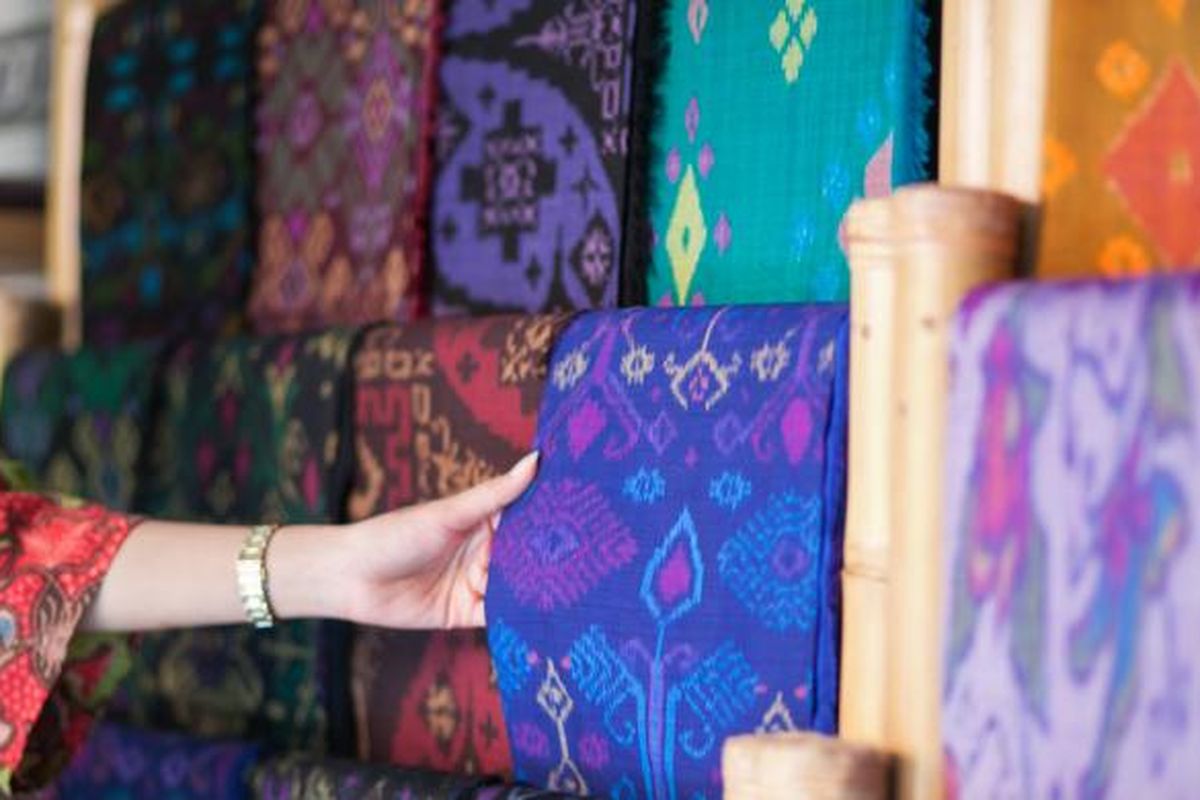
At the center of the discussion was Governor Regulation Number 79 of 2018. The policy requires civil servants to wear Balinese endek attire every Tuesday and traditional Balinese clothing every Thursday. What may look like a cultural directive, Koster said, has proven to be an economic engine that runs consistently.
The regulation has created steady demand. Artisans continue producing. Tailors keep sewing. Fabric traders maintain sales. The cycle moves because people keep buying and wearing endek.
“If civil servants within the Bali Provincial Government regularly buy new endek, for example every month, the economy will move. Traders thrive, endek tailors thrive, artisans also thrive. Everyone thrives when we consistently wear endek,” Koster emphasized.
Since the regulation came into force, the endek industry has not stood still. Koster noted that artisans have become more creative. Designs have evolved. Motifs and color patterns are now more diverse, responding to market tastes without losing Bali’s cultural identity.
“Now the motifs and patterns are more varied. This shows that our endek industry is developing,” he said.
The broader economic indicators reflect this stability. Data from the Bali Provincial Statistics Agency shows that Bali recorded an inflation rate of 2.91 percent year on year in 2025. The figure is slightly lower than the national inflation rate, which stood at 2.92 percent.
For Koster, that number matters. It signals that Bali’s economy remains within a controlled and targeted range.
Growth figures tell a similar story. Throughout 2025, Bali’s economy expanded by 5.82 percent year on year.
Read also: Nusantara Positioned as Global Living Laboratory for Sustainable Urban Development
“The condition can be measured. And it is proven that Bali’s economy grew by 5.82 percent in 2025,” he added.
Attention is now turning to the months ahead. Erwin Soeriadimadja, Head of the Bank Indonesia Representative Office for Bali Province, stated that inflation is expected to remain under control as Bali approaches major national religious holidays, including Eid al-Fitr and Nyepi.
In Bali, tradition is not separated from economics. A fabric worn on a Tuesday or Thursday carries more than cultural meaning. It carries livelihoods, stability, and measurable growth.