




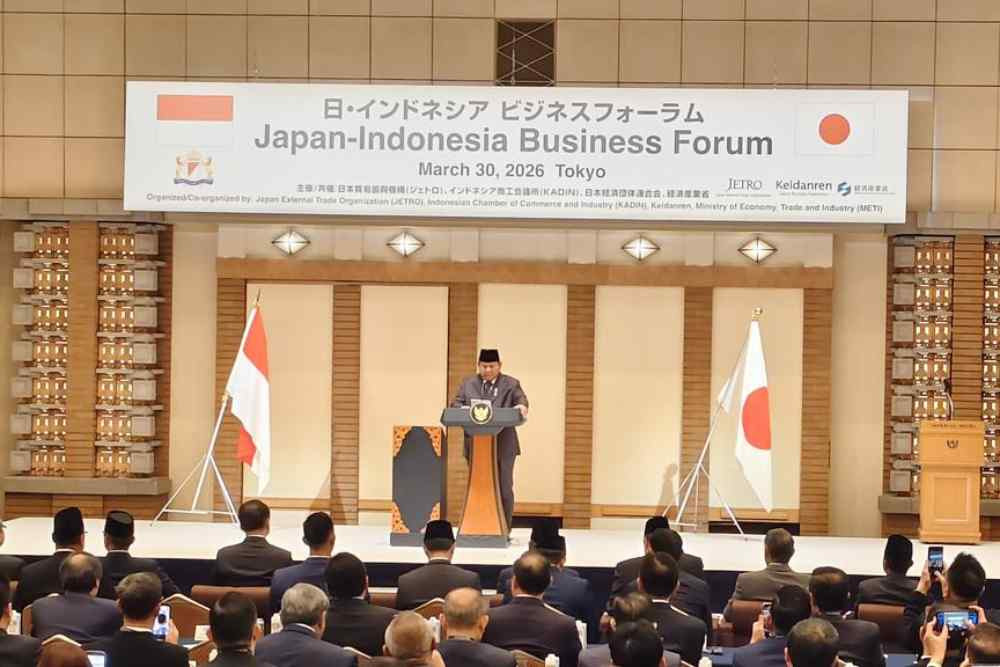

Indonesia is looking to move faster on the global stage. And its partnership with Japan is becoming one of the key drivers behind that push. A fresh wave of Indonesia-Japan cooperation has just been confirmed. A total of 11 new agreements have been signed, signaling a stronger and more active relationship between the two countries.
For the Indonesian Chamber of Commerce and Industry, this momentum is not just symbolic. It is seen as a real opportunity to push investment and innovation forward, two factors considered crucial to boosting economic growth and helping Indonesia break out of the middle-income trap.
Anindya Novyan Bakrie believes the long-standing ties between Indonesia and Japan need to evolve. The relationship, he says, must become more progressive to keep up with future global challenges.
“Indonesia must escape the middle-income trap. One way to do that is through investment and innovation so growth can exceed previous levels,” he stated on March 31, 2026.
He also pointed to another challenge that businesses cannot ignore. Global uncertainty. Geopolitical conflicts continue to shape economic conditions, and companies are expected to respond with flexibility and bold decisions.
“We understand and are sensitive to the current situation, where we must decide boldly how to move forward amid the outcomes of ongoing conflicts. But we believe there is still a way. This is something both countries can discuss to further improve cooperation. The key is how we can survive in this business environment,” he explained.
This broader vision was also reflected in a key event held in Tokyo. The Indonesia-Japan Strategic Partnership Forum took place alongside the official visit of Prabowo Subianto. The forum focused on strengthening value co-creation, especially in sectors such as energy, industry, and global supply chains.
The event brought together multiple stakeholders. It was organized in collaboration with leading Japanese institutions, including the Japan External Trade Organization, the Ministry of Economy, Trade and Industry, and the Japan Business Federation, with additional support from the Indonesian Embassy in Tokyo and other business organizations.
Read also: Brace for Extreme Dry Season! “Godzilla” El Niño 2026 Threatens Indonesia
President Prabowo attended the forum and highlighted Japan’s long-standing role in Indonesia’s development. He acknowledged the contribution of Japanese companies that have invested and grown alongside Indonesia over the years.
“Japan has consistently supported Indonesia’s economic development. Many of you in this room have been part of that journey. You have been in Indonesia for a long time. You understand Indonesia well, its people, its market, its culture, and its potential,” he said.
For the President, the relationship must go further. He stressed that in a world that is becoming more interconnected, stronger cooperation is not optional. It is necessary.
“I am here not only to continue the existing partnership but to push it to a higher and faster level. The world is getting smaller. There is no choice but close cooperation in all sectors. I believe strong economic relations and partnerships will lead to lasting peace and friendship. If we share common interests, we will protect both the present and the future,” he added.
From a business perspective, the direction is clear. Investment needs to become more concrete and more impactful.
Muhammad Lutfi emphasized that future collaboration should focus on real outcomes. Cross-sector partnerships, especially in industry, energy, and global supply chains, will play a central role in strengthening Indonesia’s competitiveness.
“The future of Indonesia–Japan partnership must continue to drive investment toward concrete value co-creation, where collaboration in industry, energy, and global supply chains will directly boost growth, innovation, and Indonesia’s competitiveness,” he said.
Beyond statements and discussions, the forum also delivered tangible results. Several strategic memorandums of understanding were announced, covering key sectors such as energy, industry, finance, and technology.
At the same time, the scale of the relationship is already significant. Trade between Indonesia and Japan has reached around US$23.6 billion. And with new agreements now in place, there is still plenty of room to grow.
What’s taking shape here is not just a continuation of an old partnership. It is a shift toward something more active, more strategic, and more focused on long-term impact.