



Indonesia and Belarus have agreed to deepen their partnership over the next five years, launching a new roadmap and signing seven cooperation agreements that span sectors ranging from industry and finance to health and security.
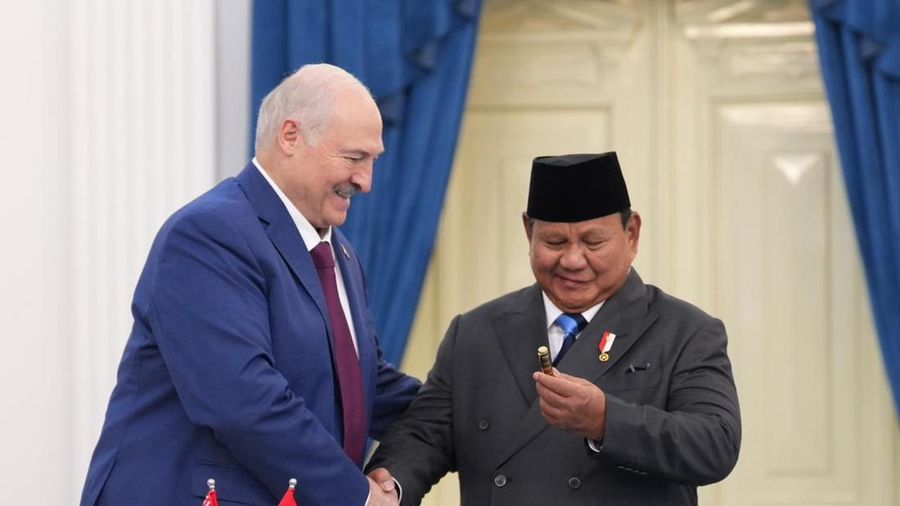
The commitments were announced following a bilateral meeting between Indonesian President Prabowo Subianto and Belarusian President Alexandr Lukashenko at the Merdeka Palace in Jakarta on Thursday (July 2, 2026).
According to Prabowo, the discussions covered a broad range of issues aimed at strengthening Indonesia-Belarus relations, including cooperation in the political sphere.
“Today, both countries have launched the Indonesia-Belarus Roadmap for Strengthening Cooperation 2026-2030, which will serve as the framework for developing bilateral relations over the next five years,” Prabowo said.
He explained that the roadmap reflects the shared determination of both governments to build a partnership that is more focused and delivers concrete outcomes.
Food security emerged as one of the key topics of discussion. Indonesia and Belarus agreed to expand cooperation in modern agricultural technology, fertilizer supplies, and heavy equipment.
The two countries also committed to strengthening economic ties. Their cooperation will cover industrial development, agricultural modernization, supply chain resilience, and technology partnerships.
Trade was another important area addressed during the meeting.
Read also: Indonesia Seeks Closer Tourism Cooperation to Attract More South Korean Travelers
“In trade, we appreciate that Belarus has completed the ratification process of the Indonesia-Eurasian Economic Union Free Trade Agreement. We are also currently undertaking the ratification process,” Prabowo said.
In the industrial sector, both governments see significant opportunities to increase investment and establish joint ventures between businesses from the two countries. The areas identified for cooperation include manufacturing, automotive industries, heavy vehicles, and agribusiness.
Beyond economic issues, Indonesia and Belarus also agreed to foster closer cooperation in socio-cultural affairs and human resource development. The partnership will be strengthened through cultural exchanges and deeper collaboration between educational institutions and vocational training centers.
The agreements reached during the meeting were formalized through seven memorandums and cooperation documents signed by representatives of both countries.
The first agreement covers industrial cooperation between Indonesia’s Ministry of Industry and Belarus’ Ministry of Industry.
The second focuses on cultural cooperation between the culture ministries of both countries.
The third establishes cooperation between Indonesia’s Financial Services Authority and the National Bank of Belarus.
The fourth concerns cooperation in the health sector between the health ministries of Indonesia and Belarus.
The fifth is an agreement on scientific and technical cooperation between Indonesia’s National Research and Innovation Agency and the National Academy of Sciences of Belarus.
The sixth covers cooperation and the exchange of intelligence reports related to money laundering, terrorism financing, and the proliferation of weapons of mass destruction between Indonesia’s Financial Transaction Reports and Analysis Center and Belarus’ Department of Financial Monitoring under the State Control Committee.
The seventh agreement focuses on cooperation in national accreditation and was signed by the chair of Indonesia’s National Accreditation Committee.
President Lukashenko expressed his full support for implementing the Indonesia-Belarus Roadmap for Strengthening Cooperation 2026-2030.
He said the discussions also addressed several global issues, including food security, military conflicts, energy challenges, and maritime trade routes.
“I believe there is a need for cooperation in food security so that every country can independently serve its own needs,” Lukashenko said.
He also reaffirmed Belarus’ readiness to assist Indonesia in strengthening food security. The support could include larger fertilizer supplies, agricultural equipment, farming techniques, and potential cooperation in the automotive and tractor industries.
The agreements reached in Jakarta mark a new chapter in Indonesia-Belarus relations, with both countries seeking to translate their shared commitments into practical cooperation and long-term partnerships across multiple sectors over the next five years.