




Following immigration rules is essential for anyone entering or leaving a foreign country. Attempts to manipulate these documents or bypass immigration requirements are taken seriously by authorities and can lead to severe consequences, including deportation. A recent case in Bali serves as a reminder of what can happen when someone tries to get around these rules.
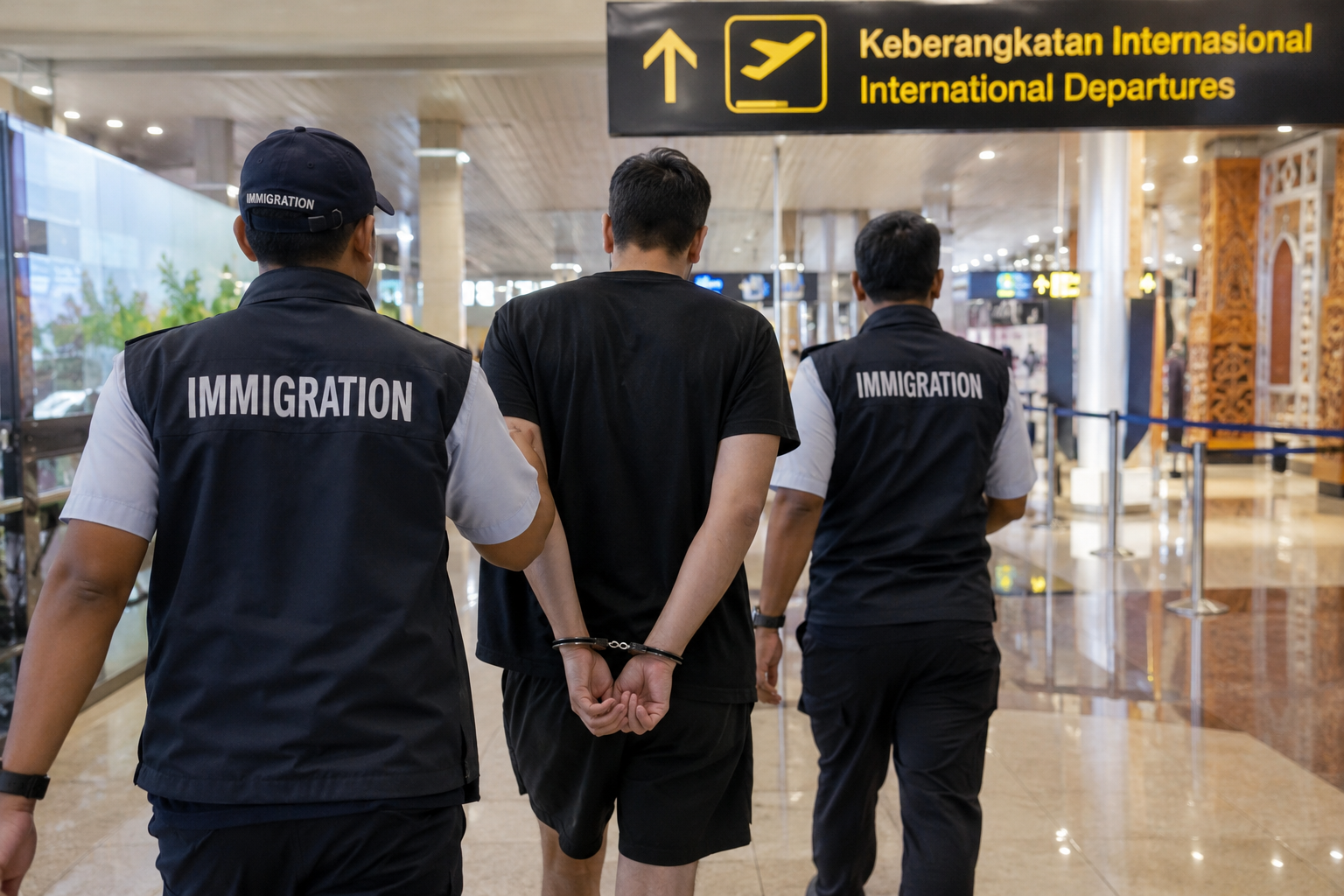
An Indian national identified by the initials SP was deported from Indonesia after immigration officers discovered that he possessed two Indian passports containing different personal identities. The case came to light during a routine inspection on Wednesday, October 14, 2026, when SP was preparing to travel from Bali to Manila, the Philippines.
According to a report by detikBali on November 2, Head of Ngurah Rai Immigration Office Muhamad Novyandri explained that officers first became suspicious while checking the passport SP presented for his departure. Several irregularities prompted them to conduct a more detailed examination.
“During the inspection, our officers found irregularities in the passport being used. Following further examination, it was discovered that the individual had another passport under a different identity,” Novyandri said in a statement issued recently.
Further questioning revealed that SP had two Indian passports. Immigration authorities subsequently sent both documents to their forensic laboratory for examination. The results indicated suspected alterations to the biodata pages, which contain the passport holder’s personal information.
Read also: Meet MaiA, Indonesia’s AI Travel Assistant for Exploring the Country
After gathering sufficient evidence of the violation, immigration authorities proceeded with SP’s deportation. He was removed from Indonesia on Tuesday, October 27, 2026, and returned to India on a flight to Chennai, with a transit stop in Kuala Lumpur, Malaysia.
Immigration records showed that SP had spent 12 days in Indonesia before planning to continue his journey to Manila. The violation was therefore uncovered as he was preparing to leave the country, rather than when he first arrived.
The incident highlights how Indonesia’s immigration supervision extends throughout a foreign national’s stay in the country. Inspections don’t stop once travelers have passed through an arrival checkpoint. Authorities also verify travel documents when foreign nationals are preparing to depart, as SP’s case demonstrates.
Novyandri emphasized that monitoring passengers at departure points is an important part of the immigration office’s responsibility. Officers must ensure that everyone leaving Indonesia uses valid travel documents and complies with the applicable regulations.
“This shows that immigration supervision is not limited to when foreign nationals enter Indonesia. It also applies when they are preparing to leave Indonesian territory,” he explained.
The Ngurah Rai Immigration Office will continue strengthening inspections of everyone entering and leaving Bali. These checks are intended to verify that travel documents are genuine, valid, and consistent with immigration requirements.
For Bali, which welcomes large numbers of international visitors, such procedures are important for maintaining oversight of cross-border movement. Careful document inspections allow officers to identify irregularities that might otherwise go unnoticed during international travel.
Novyandri clarified that tighter immigration checks are not intended to make international travel more difficult. Tourists and other international travelers can still enter and leave Indonesia as long as they meet the requirements and carry valid travel documents.
The objective is to protect security and maintain public order. By checking documents carefully at both arrival and departure points, immigration officers can detect potential violations and take appropriate action.
“Strict supervision is not intended to make travel more difficult, but to maintain security and public order for everyone,” Novyandri concluded.
SP’s deportation demonstrates why immigration checks remain necessary throughout a foreign national’s time in Indonesia. Even after spending several days in the country, travelers are still subject to document verification when they leave. Any attempt to use questionable or manipulated travel documents can be uncovered during these inspections and result in serious immigration consequences.