




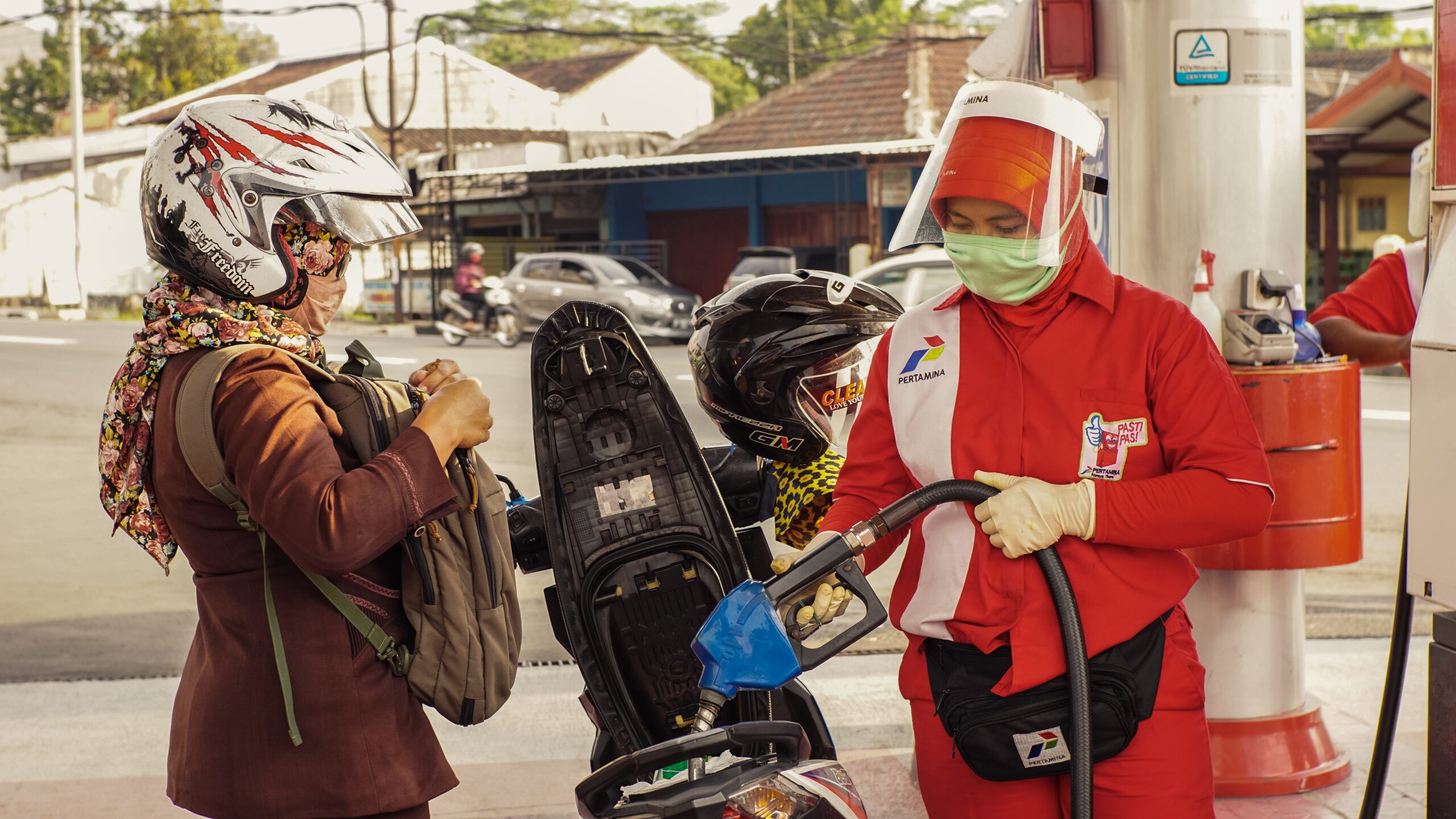

Indonesia is taking a major step toward cleaner and more sustainable energy use. The government is preparing to implement a mandatory policy requiring a 10% ethanol blend in gasoline in Indonesia, known as E10. This decision, already approved by President Prabowo Subianto, reflects the country’s determination to cut fuel imports while fostering local industry and job creation.
Minister of Energy and Mineral Resources Bahlil Lahadalia revealed that his ministry is currently mapping out the roadmap for the E10 policy. He explained that the move is not just about fuel efficiency but also about national economic growth. “The goal is to reduce imports. Ethanol comes from cassava or sugarcane, and this can create jobs, boost regional economies, and strengthen the government’s position,” Bahlil said.
He pointed out that blending ethanol with fuel is not a new concept. Many nations have successfully adopted similar practices. Brazil, for instance, has gone as far as mixing up to 27% ethanol in its gasoline, with some regions even reaching 100% or E100. In the United States, most states already use E10, while others have shifted to E85. India and Thailand have both introduced E20 blends, and Argentina applies E12.
Read also: North Bali International Airport Design Revealed! Looks Like a Turtle
For this reason, Bahlil dismissed claims that ethanol is unsuitable as a fuel additive. “It’s not true to say ethanol isn’t good. The proof is that many countries already use it,” he stated.
To understand how ethanol affects performance, fuel expert Tri Yuswidjajanto from the Bandung Institute of Technology (ITB) outlined its benefits and challenges. Ethanol, he explained, has a high octane rating, between 110 and 120 on the Research Octane Number (RON) scale. When about 3.5% ethanol is added to gasoline, the octane level can rise by 3.85 to 4.2 points.
However, ethanol carries less energy than pure gasoline. “Ethanol contains around 26.8–29.7 MJ/kg, while gasoline has about 40 MJ/kg. So, adding 3.5% ethanol lowers the total energy content of the mixture by roughly 1%,” Tri told CNBC Indonesia on Monday (October 13, 2025).
He added that ethanol can reduce carbon dioxide emissions by up to 3.5% since it comes from plant-based materials considered carbon neutral. Yet, its oxygen content can also increase the Air Fuel Ratio (AFR), which may cause engines to run hotter than usual.
“It is hygroscopic, meaning it absorbs moisture, which increases the water content in gasoline. When fuel mixes with water, ethanol levels drop, and that causes the RON to decrease,” Tri explained.
He also noted that older vehicles, which still use rubber components and traditional seals, might not be compatible with ethanol blends. Modern cars, however, are generally designed to handle gasoline containing up to 20% ethanol.
“The need for deposit-control additives increases if gasoline contains ethanol,” he added.
As Indonesia moves forward with the 10% ethanol gasoline program, the policy marks a crucial step in balancing energy independence with environmental sustainability, aligning the nation with global standards while supporting local farmers and industries.