




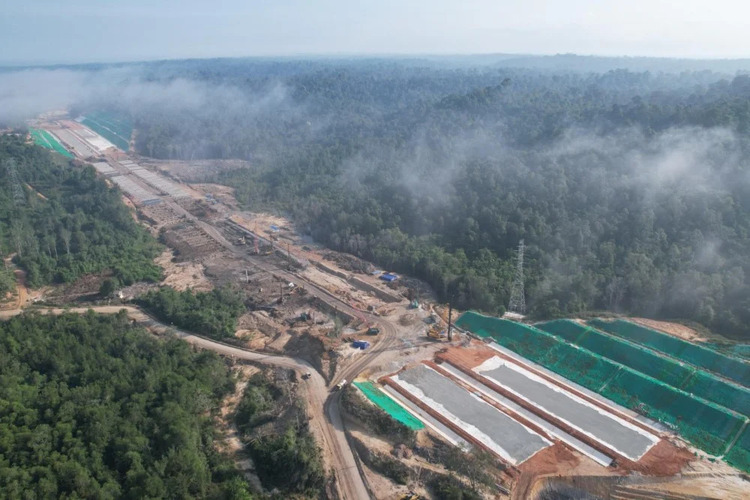

Indonesia is preparing for one of its largest infrastructure expansion programs, with the government of President Prabowo Subianto planning the development of 50 toll roads that have been designated as National Strategic Projects (PSN). The initiative is considered crucial for strengthening connectivity across regions, particularly along major logistics corridors that support the movement of goods and people throughout the country.
The list of toll roads in Indonesia is included in Coordinating Minister for Economic Affairs Regulation No. 16 of 2025. The regulation also outlines procedures if any National Strategic Project cannot be completed according to schedule.
“In the event that a National Strategic Project as referred to in paragraph (1) cannot be completed on time, the party responsible for the National Strategic Project shall report the implementation progress and propose revisions to the completion plan to the Coordinating Minister for Economic Affairs,” states Article 2A paragraph 2.
One of the largest projects currently receiving significant attention is the Trans Sumatra Toll Road (JTTS), which is planned to connect Lampung in the south to Aceh at the northern tip of Sumatra. PT Hutama Karya (Persero), which serves as both the contractor and operator of the network, revealed that approximately 1,618 kilometers of toll road sections are still yet to be constructed.
Beyond building new roads, the government is also directing funding toward upgrading and maintaining existing infrastructure. Authorities believe this effort is essential to preserving regional connectivity, especially along key logistics routes that play a vital role in supporting national distribution networks and public mobility.
Read also: Indonesia Accelerates Healthcare Robotics to Support Stroke Recovery
The 50 toll roads included in the National Strategic Project list are spread across various regions of Indonesia.
The projects include the Serang–Panimbang Toll Road in Banten, the Pandaan–Malang Toll Road in East Java, the Manado–Bitung Toll Road in North Sulawesi, and the Balikpapan–Samarinda Toll Road in East Kalimantan.
Several projects are part of the broader Trans Sumatra Toll Road network. These include the Medan–Binjai Toll Road in North Sumatra, Pekanbaru–Kandis–Dumai in Riau, Kisaran–Tebing Tinggi in North Sumatra, Sigli–Banda Aceh in Aceh, Binjai–Langsa across Aceh and North Sumatra, Bukittinggi–Padang Panjang–Lubuk Alung–Padang in West Sumatra, Pekanbaru–Bangkinang–Payakumbuh–Bukittinggi connecting Riau and West Sumatra, Tebing Tinggi–Pematang Siantar–Prapat–Tarutung–Sibolga in North Sumatra, Betung (Sp. Sekayu)–Tempino–Jambi linking South Sumatra and Jambi, Jambi–Rengat connecting Jambi and Riau, Rengat–Pekanbaru in Riau, Simpang Indralaya–Muara Enim in South Sumatra, Lubuk Linggau–Curup–Bengkulu linking South Sumatra and Bengkulu, and the Kayu Agung–Palembang–Betung Toll Road in South Sumatra.
Java also accounts for a significant portion of the planned projects. These include the Cileunyi–Sumedang–Dawuan Toll Road, Ciawi–Sukabumi–Ciranjang–Padalarang, Serpong–Cinere, Cinere–Jagorawi, Cimanggis–Cibitung, Cengkareng–Batu Ceper–Kunciran, Cibitung–Cilincing, Bekasi–Cawang–Kampung Melayu, Serpong–Balaraja, Jakarta–Cikampek II South Side, Semarang–Demak, Yogyakarta–Bawen, Depok–Antasari including Bojonggede–Salabenda, Solo–Yogyakarta–Kulon Progo, Bogor Ring Road including Caringin–Salabenda, Gedebage–Tasikmalaya–Cilacap, and the Patimban Port Access Toll Road.
Several projects are concentrated within the Jakarta metropolitan area. These include the Semanan–Sunter, Sunter–Pulo Gebang, Duri Pulo–Kampung Melayu, Kemayoran–Kampung Melayu, Ulujami–Tanah Abang, and Pasar Minggu–Casablanca toll roads, all of which form part of Jakarta’s six inner-city toll road network.
East Java will also see multiple developments, including the Pasuruan–Probolinggo Toll Road, Probolinggo–Banyuwangi Toll Road, Krian–Legundi–Bunder–Manyar Toll Road, Ngawi–Kertosono–Kediri Toll Road, and the construction of a flyover connecting to and from Teluk Lamong Terminal.
Outside Java and Sumatra, the government is moving forward with the Gilimanuk–Negara–Pekutatan–Soka–Mengwi Toll Road in Bali. Meanwhile, Jakarta will receive additional infrastructure through the New Priok Eastern Access (NPEA) project and the development of the Ir. Wiyoto Wiyono M.Sc. Toll Road Section Harbour Road II, which includes the elevated Ancol Timur–Pluit section.
West Java is also included in the plan through the development of Bandung’s urban toll road network, consisting of the North–South Link Bandung and the Bandung Inter Urban Toll Road.
With dozens of projects spanning the country, the government aims to strengthen transportation links, support economic growth, improve logistics efficiency, and ensure smoother mobility for communities and businesses alike. The toll road expansion program is expected to become one of the key pillars supporting Indonesia’s long-term infrastructure and connectivity agenda.