




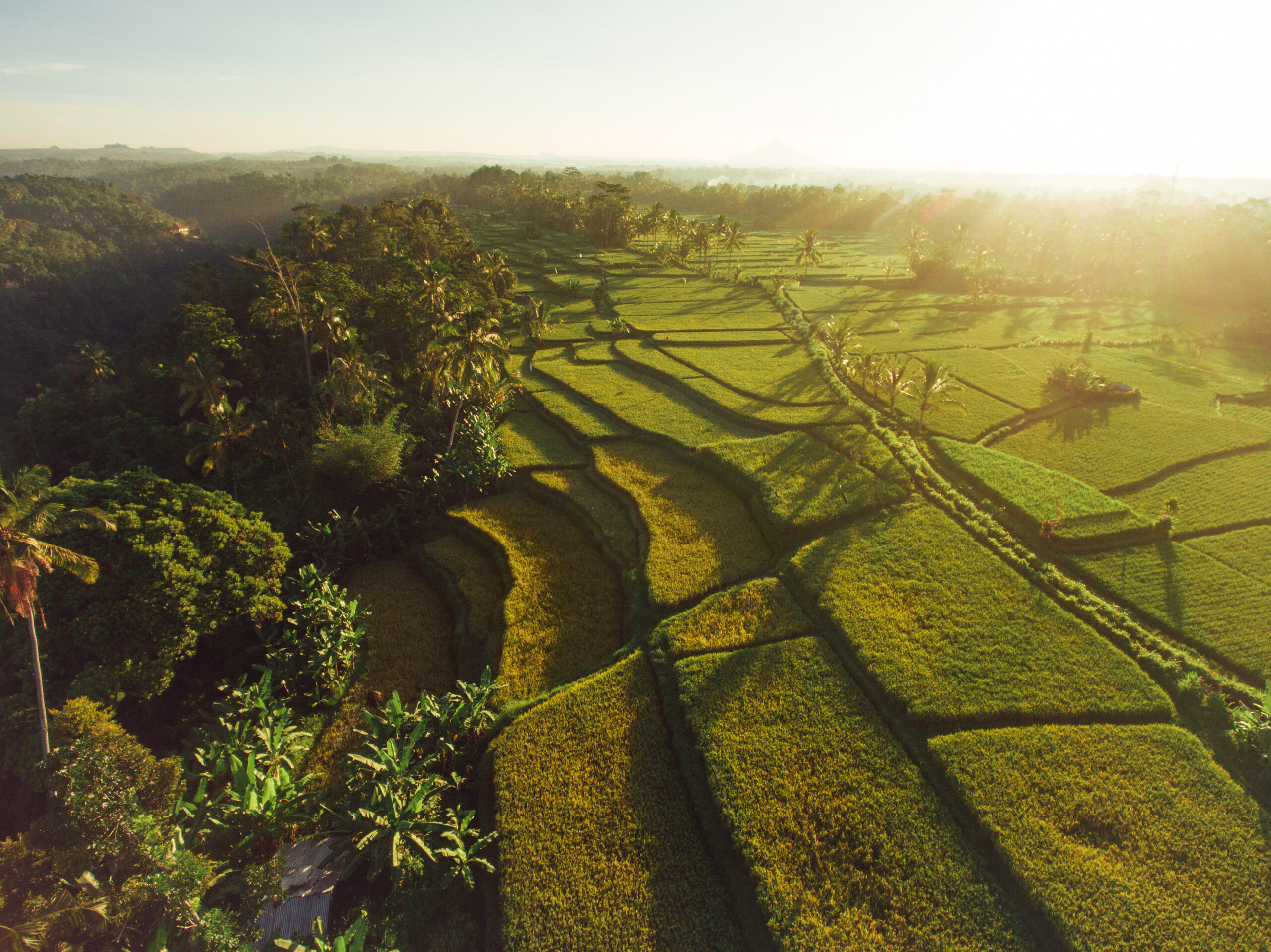

Bali’s picturesque rice fields, once a defining feature of the island’s landscape, are shrinking at an alarming rate. According to the Bali Provincial Statistics Agency (BPS), the total area of rice fields in Bali has fallen from over 70 thousand hectares in 2019 to just over 64 thousand hectares in 2024.
The figures were taken from the decree issued by the Minister of Agrarian Affairs and Spatial Planning/National Land Agency (ATR/BPN) regarding the Determination of National Rice Field Areas.
BPS Bali Head, Agus Gede Hendrayana Hermawan, said the decline is closely linked to the island’s rapid pace of development. “So, development definitely has an impact on land conversion, as some areas are being used for construction,” he said.
This trend placed Bali ninth among regions in Indonesia with the steepest decrease in rice field area. Agus added that more detailed data identifying the exact locations of lost farmland has yet to be compiled. He also could not confirm whether the reduction was directly tied to tourism expansion. However, he acknowledged that construction-related land use clearly contributes to the shrinking farmland.
The decline in rice field area, according to Agus, could lead to a drop in overall agricultural productivity. Still, he believes the impact can be managed if farmers maintain or improve their yields. “But if productivity doesn’t increase significantly while the land area decreases, agricultural output will inevitably decline,” he noted.
Expanding the total farmland, however, is not a realistic option for Bali due to its limited size. Agus hopes the data will serve as a wake-up call for the Bali Provincial Government to take action in preserving the remaining rice fields. He suggested that boosting productivity is the most effective strategy moving forward.
Read also: Wonderful Indonesia Wellness 2025 Held in Solo and Yogyakarta for a Full Month
“So, the land must be preserved, and productivity must be increased. That will automatically boost agricultural production,” he said.
Agus also encouraged a stronger push toward organic farming, which he believes could offer new economic opportunities for local farmers. “If we talk about added value with the same volume, organic farming offers far greater added value than conventional farming,” he explained.
He concluded that if expanding farmland is no longer possible, Bali’s future in agriculture lies in improving the productivity and added value of the rice fields that still remain.














, the total area of rice fields in Bali has fallen from over 70 thousand hectares in..)